You may be standing in a garage that has filled up over the years, a rental unit between tenants, a relative's home, or an office with old furniture stacked in a back room. Whoever owns the space and whatever the reason for clearing it, the same few things decide how the items leave the property: what they are, how much there is, how they are reached, and which of them need a separate route. This guide walks through each of those in order for San Diego County.
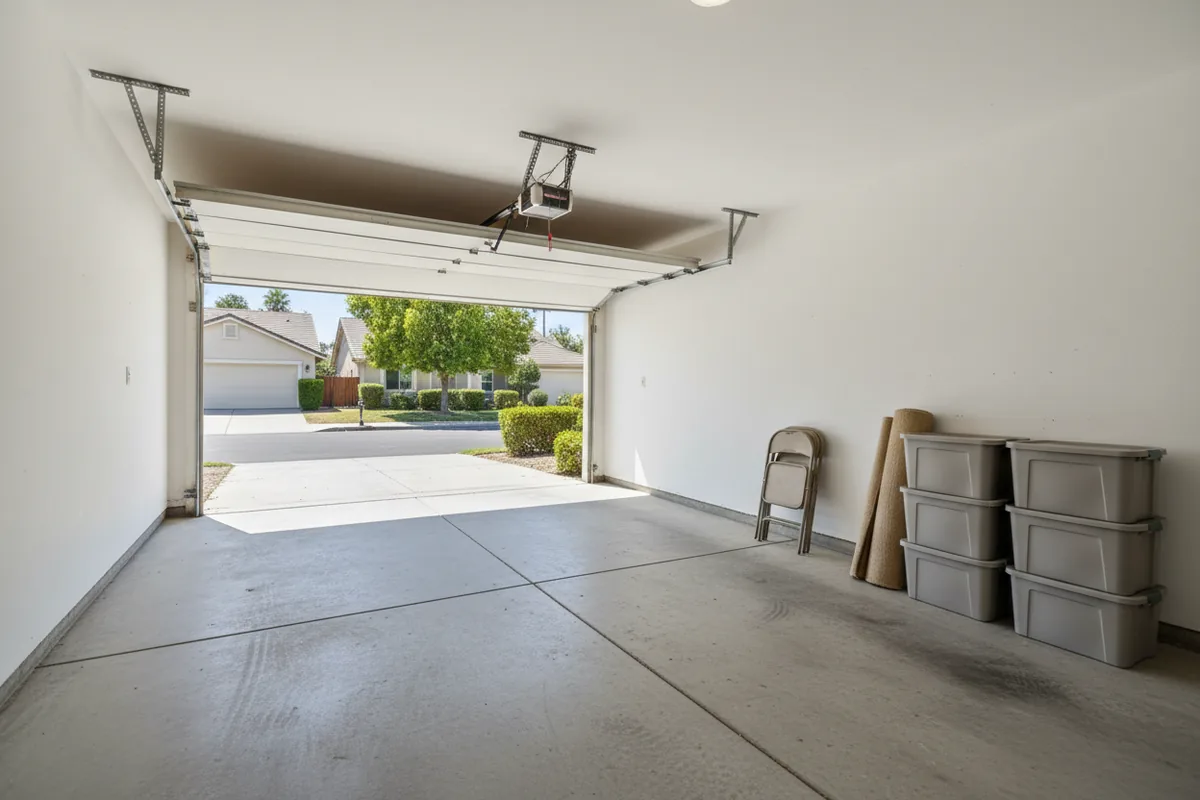
Junk removal works in a few plain steps. You describe the items or space to be cleared, a hauler gives a written quote based on amount, weight, access and disposal, and on the agreed visit the crew loads everything marked to go and takes it away for disposal, recycling or donation.
On this page
What Junk Removal Covers
Junk removal means having unwanted items carried out of a home, yard or business and taken away. Hauling is the transport part of that work: loading the items into a truck or trailer and driving them to where they will be disposed of, recycled or donated.
The range of items is wide. A job might include:
- Furniture such as couches, beds, dressers, desks and tables.
- Appliances such as washers, dryers, stoves and refrigerators.
- Mattresses and box springs.
- Electronics such as televisions, monitors and computers.
- Yard debris such as branches, clippings and old planters.
- Debris left from a remodel, such as drywall, flooring and cabinets.
The scope can be one item or a whole property, from a single couch to a full cleanout. An overview of junk removal in San Diego County covers the general service on its own.
When Junk Removal Makes Sense
Three routes usually compete for the same pile: hauling it yourself, a city's curbside pickup, and hiring a hauler. Each has a trade-off.
A bulky item is a large household item too big to fit in a standard trash cart, such as a sofa, a mattress or an appliance. Some cities and their franchise haulers in San Diego County run curbside bulky-item pickup, and what each program accepts, how many items it takes and how it is scheduled differ from city to city. Because those terms vary, each city's own program page is where they are spelled out. For the City of San Diego, the page on junk removal in San Diego describes what the city does and does not pick up.
| Route | What it involves | Main trade-off |
|---|---|---|
| Self-hauling | Loading your own vehicle and driving to a transfer station or landfill | Needs a suitable vehicle, lifting help and time; facility rules and fees apply |
| Curbside bulky-item pickup | Setting items at the curb on a scheduled day | Item types and quantities are set by your city's program |
| Hiring a hauler | A crew carries items out and takes them away | A quoted cost in exchange for the labor, transport and disposal |
A transfer station is a facility where loads are dropped off, sorted and sent on to recycling or a landfill. Facility rules and fees for self-haulers are set by each site.
A hauler tends to fit when the volume is larger than a curbside program allows, when the load mixes furniture, debris and household goods, when there is no truck available, when the timing is tight, or when a whole home, estate or rental unit needs clearing at once.
Items That Need Special Handling
Some items do not go out with an ordinary load, and sorting them first keeps the rest of the job simple.
Household hazardous waste is any leftover product from a home that can harm people or the environment if thrown in the trash: paint, solvents, pesticides, pool chemicals, batteries and fluorescent bulbs. These generally go to a household hazardous waste collection program rather than into a hauler's truck. The county program that runs collection in your area lists what it accepts and where to drop it off.
Electronic waste, or e-waste, means discarded devices with circuit boards or screens, such as televisions, computer monitors, laptops and printers. California treats many of these devices separately from regular trash, and CalRecycle, the state's recycling agency, sets out how they are handled.
Mattresses have their own recycling route in California, also overseen by CalRecycle. The page on mattress removal in San Diego County covers drop-off terms and when a haul-away may fit better.
Tires have separate disposal rules and are often kept out of a mixed load.
Appliances with refrigerants, such as refrigerators, freezers and air conditioners, contain gases that must be removed properly under federal and state rules before the appliance is scrapped.
Construction and demolition debris is the waste from building, remodeling or tearing out part of a structure: lumber, drywall, concrete, tile, roofing and fixtures. Green waste is plant material from a yard, such as grass, leaves, branches and brush. Both are often separated from household junk because they go to different facilities.
Haulers differ in which of these items they take, so each hauler is the one to say what it accepts. For how a program's rules apply to a specific item, the agency running that program has the final word.
What Affects the Price
A junk removal quote rests on the job in front of the hauler, not on a flat figure. It helps to think of the price as the sum of a few practical questions about your particular pile.
The first is size. More items take more space in the truck and can mean more trips, and heavier loads, such as concrete, tile or appliances, cost more to move and to dispose of. The type of material matters too: ordinary household items differ from materials that require separate disposal channels, which can carry their own handling or facility fees.
The second is how hard the items are to reach and move. Stairs, narrow hallways, tight doorways, an elevator, or a long walk from the truck to the items all add labor. So does disassembly, when a bed frame, a sectional or a hot tub has to be taken apart before it fits through a door.
The last is where everything goes and when. Whether each item heads to a transfer station, a recycler or a donation drop-off affects the cost of getting rid of it, and a narrow window or a specific date can affect scheduling.
A written quote sets out how these factors apply to your items and your property. Knowing what the quote includes, and what it leaves out, makes it easier to compare one hauler's figure with another's.
How to Get Ready
A little preparation makes the visit go smoothly and keeps your things where they belong, whether the job is a single room or a whole house.
Most of the work is sorting. It helps to separate ordinary junk from household hazardous waste, electronic waste and the other items described in the previous section, and to mark those special-handling items so they can be routed correctly or kept aside. Papers, photos, keepsakes and anything a family member may want are safest moved into a closed-off area before the crew arrives.
The rest is about access. It is useful to note the stairs, narrow doorways or elevator along the path out, how far the items sit from the street, where a truck could park and any limits on street or driveway parking. Buildings and homeowners associations sometimes set hours, require elevator reservations or gate codes, or ask for notice in advance. At a rental or an estate property in particular, it is worth settling who will be on site or how the hauler will get in.
What happens to the house itself is a separate decision; clearing a property does not require selling it.
A short written list of the items, or a few photos of each room or pile, with notes on stairs and parking, covers what a quote request asks for and makes the job easier to describe clearly.
Mistakes to Avoid
Each of these is a quick check rather than a cause for worry.
- Mixing hazardous items into the load. Paint cans, batteries or an old monitor tucked into a box can stop the job or force a re-sort, since a hauler may not accept them.
- Assuming curbside pickup covers everything. City bulky-item programs set item and quantity limits, so a large pile may exceed what the program will take.
- Skipping the access check. Stairs, a full driveway or a building rule about move hours can change what a hauler can do on the day.
- Leaving keepsakes in the pile. Once a load is driven away, getting an item back is not assured, so anything to keep is safer moved out of the area first.
- Assuming the quote includes regulated items. Disposal of mattresses, tires, appliances with refrigerants or electronics may be priced separately, and asking about it up front avoids a surprise.
Ready for a quote?
Add the items, the address and your timing.
Get my junk removal quoteFrequently asked questions
What items will junk removal services not take?
Haulers often decline household hazardous waste such as paint, solvents, pesticides and batteries, and some do not take electronic waste or tires. Those items usually go through a county collection program or a state-overseen recycling route instead. Each hauler states what it accepts, and the program that handles the material explains where it goes.
Why does junk removal cost more for some jobs than others?
The cost follows the job: the volume and weight of the items, the type of material, how hard the items are to reach, whether anything must be taken apart, and how each item is disposed of. A written quote applies those factors to your specific items and property.
Is junk removal the same as a bulky-item pickup?
No. A bulky-item pickup is a curbside service some cities and their franchise haulers in San Diego County run, with limits on item types and quantities. Junk removal by a hauler can include carrying items out from inside a property and handling larger or mixed loads. Your city's program page lists what its pickup covers.
Can a junk removal hauler take appliances?
Many appliances go out with an ordinary load, but refrigerators, freezers and air conditioners contain refrigerants that must be removed properly under federal and state rules. Whether a particular hauler takes them, and how that is handled in the quote, varies by hauler.
What is the difference between junk removal and a cleanout?
Junk removal usually means hauling away specific items, such as a couch or an old washer. A cleanout means clearing an entire space, such as a garage, a home or a rental unit, of most or all of its contents. The hauling process is the same; the scope differs.
Do I need to be present when the hauler comes?
It depends on the property and the job. At a rental or an estate property, someone with authority over the space typically needs to be there or to have arranged access ahead of the visit. How access will work is a useful point to raise when requesting a quote.