Maybe the pile is an old patio slab, soil from a regraded yard or rock left over from a garden redesign, and the question is simply how it leaves the property. Four things decide that: the kind of material, how clean it is, how much there is and how a truck reaches it. The sections below take those points one at a time.
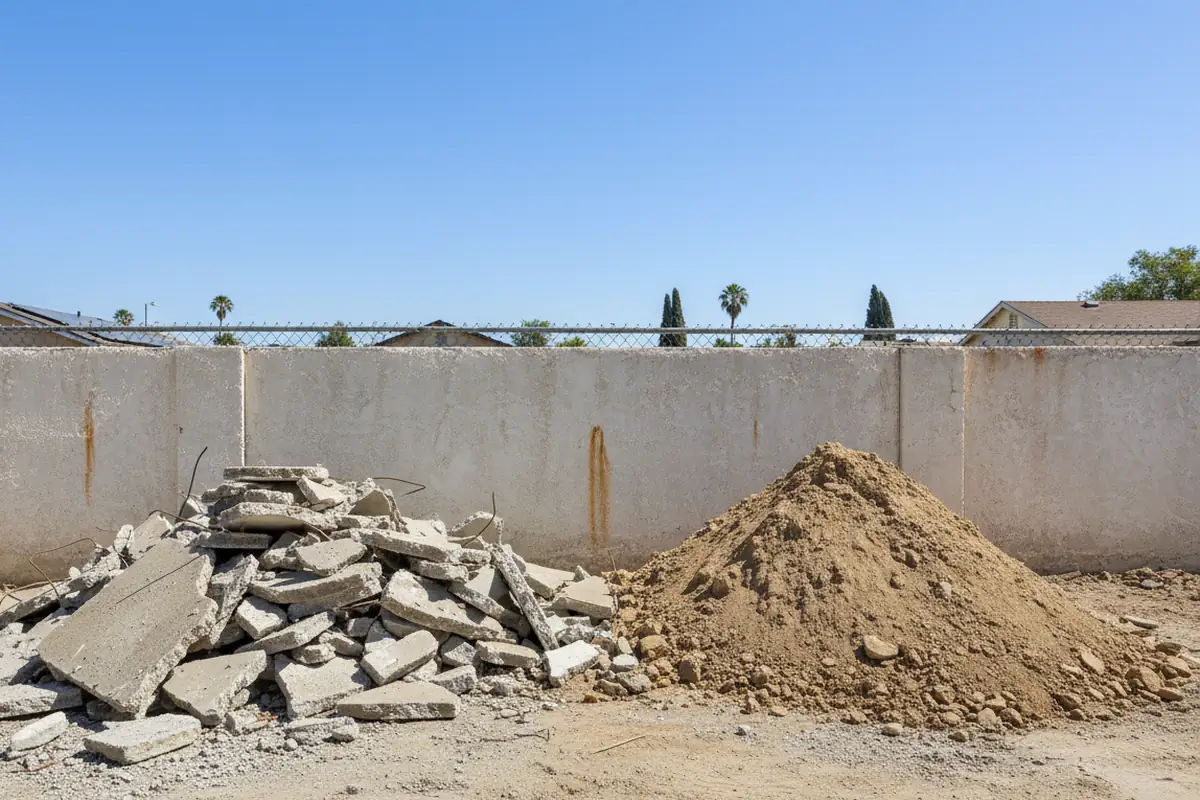
Broken concrete, excavated dirt and rock can be hauled away in San Diego County, but they are handled differently from household junk. Weight, not the space the material takes up, sets how many loads a job needs and what it costs. Clean, sorted material also has more possible destinations than a mixed or contaminated pile.
On this page
What Concrete, Dirt and Rock Removal Covers
This kind of removal handles construction and demolition debris, meaning the leftover material from building, tearing out or remodeling something, along with excavated earth and stone. The materials it covers include:
- Broken concrete slabs and poured concrete chunks.
- Asphalt from driveways or paths.
- Excavated soil, fill dirt and clay.
- Gravel and crushed rock.
- Pavers, flagstone and river rock.
The difference from ordinary junk removal in San Diego County is density. A couch or a stack of boxes fills a truck bed long before the truck reaches its load limit. A single wheelbarrow of concrete is heavier than a large amount of household goods, so a heavy-debris job reaches the truck's payload limit while the bed still looks nearly empty.
Two other categories are kept separate. Green waste is plant material such as yard trimmings, brush, roots and sod. Household hazardous waste covers products like paint, fuel, oil and chemicals that need special disposal.
When Concrete and Dirt Removal Makes Sense
Heavy debris usually comes from a specific project. Common sources include:
- Replacing a driveway.
- Demolishing a patio or walkway.
- Tearing down a retaining wall.
- Removing or filling a pool.
- Regrading a yard during landscaping.
- Pulling fence posts set in concrete.
- Taking out a shed foundation.
A removal service fits when the debris is already broken and piled, when nobody on the property has a dump truck or trailer, when bins in the street are restricted, or when the site is hard to reach. On a San Diego County property, the layout of the lot matters. A slope, a narrow driveway or a yard reached only through a side gate changes how material is staged and loaded.
Where the material ends up, whether at a recycling facility or a landfill, depends on what it is and what condition it is in. The next section explains why.
Items That Need Special Handling
Within this category, a few materials raise questions that plain concrete or clean dirt does not.
Reinforced concrete. Concrete with rebar or wire mesh inside may need the metal cut or separated. The receiving facility decides whether it takes reinforced pieces as they are. Metal pulled from the pile can go out on its own, much as it does in scrap metal removal.
Asphalt. Asphalt is a separate material stream from concrete. Keeping the two apart keeps the options for each one open.
Contaminated soil. Soil mixed with oil, fuel, paint or chemicals is not clean fill. The receiving facility and the agency that oversees hazardous materials in San Diego County confirm how it may be handled. Whether a given soil qualifies is their call, not something a general guide can settle.
Tile, brick and mortar. These are usually treated as construction and demolition debris, but each facility sets its own acceptance terms.
Mixed loads. Concrete or dirt with wood, metal, plastic or household trash in it may be reclassified as mixed debris or general waste. That changes which facilities take the load and what they charge for it.
What Affects the Price of Concrete and Dirt Removal
No figure appears here because each job is different. These are the factors a written quote takes into account.
| Factor | Why it matters |
|---|---|
| Heaviness of the material | Concrete and soil use up a truck's payload quickly, so the amount of material sets how many loads the job needs. |
| Access | Distance to the truck, stairs, narrow gates, slopes and below-grade locations all add labor. |
| Load makeup | A clean, single-material load and a mixed load go to different kinds of facilities, at different costs. |
| Breaking and loading | Debris that is already broken and piled is a smaller job than slabs that still need breaking up. |
| Tipping fee | This is the fee a receiving facility charges to accept a load. It is set by that facility's own schedule and depends on the material. |
A garage full of household junk and a patio's worth of rubble can look similar in size and still be priced very differently. A written quote for the specific material, amount and access gives the figure for one job. Pricing for bulky household items follows a different pattern, which is described under furniture removal.
How to Get Ready for a Concrete or Dirt Removal
Preparation comes down to knowing what is in the pile and how a truck reaches it. Helpful notes include:
- The amount. The pile's length, width and depth, or a count of wheelbarrow loads.
- The material. Whether it is clean concrete, reinforced concrete, asphalt, clean fill, clay, mixed soil or gravel.
- Staging. Whether broken pieces can sit near the driveway or street, and anything that is still whole.
- Access. Gate width, overhead clearance, where a truck can park, and whether the city or the homeowners association (HOA) requires a permit for a bin or truck in the street.
- Possible contamination. Any soil that sat near a fuel tank, chemical storage or painted surfaces.
- Other contents. Any wood, metal, plastic or trash inside the pile.
For a job site or a business property, the same notes apply, and the commercial junk removal process uses them in the same way.
Common Mistakes
These are points to check, not emergencies. Each one is easy to deal with when it comes up early.
- Mixing questionable soil into a clean load. Contaminated material changes how the whole load is classified, and a facility may turn the load away.
- Assuming rebar is fine. Some facilities want reinforcing metal cut or separated before they accept concrete.
- Judging the pile by how big it looks. A modest-looking pile of rock or soil can need more than one load.
- Placing a bin in the street without checking. Permit rules for street bins differ between jurisdictions in San Diego County, and an HOA may have its own rules.
- Leaving roots and sod in fill dirt. Plant material is green waste, a separate material stream from soil.
- Mentioning contamination only at pickup. A late discovery changes the scope of the job and where the material can go.
Ready for a quote?
Add the items, the address and your timing.
Get my junk removal quoteFrequently asked questions
What is the difference between concrete removal and dirt removal?
Concrete is a manufactured material, sometimes with rebar inside it. Dirt is excavated earth. Both are heavy debris, priced mainly by how heavy the load is, but they are separate material streams with different possible destinations.
Can concrete and dirt be recycled in San Diego County?
It depends on the material and on what a receiving facility accepts. Clean, uncontaminated material that is kept separate keeps more options open. Contaminated soil and mixed loads do not qualify as clean material, and the receiving facility confirms what it takes.
How much does concrete and dirt removal cost in San Diego?
The cost depends on how heavy the material is, the access, what the load contains and the receiving facility's tipping fee. A written quote based on the material type, the amount and the access gives the figure for a particular job.
Can I put concrete or dirt in a dumpster or roll-off bin?
That depends on the bin provider's own terms for heavy materials. Mixing concrete or dirt with general trash can change how the load is classified. Whether a bin in the street needs a permit is for the city, the county or the HOA to confirm.
What happens if soil is contaminated?
Contaminated soil cannot be handled as clean fill. The receiving facility and the agency overseeing hazardous materials in San Diego County confirm how it may be disposed of, so it helps to mention it when requesting a quote.
How is concrete and dirt removal different from regular junk removal?
Beyond weight, heavy debris goes to different kinds of facilities, and some of it, such as reinforced concrete, asphalt and contaminated soil, carries its own acceptance conditions.