Maybe it's a full garage, a few pieces of furniture after a move, a relative's house or leftovers from a renovation. Whatever the job, the sections below walk through each pricing factor in plain terms, the items that change how a load leaves the property, and what to gather so a quote matches what is actually there.
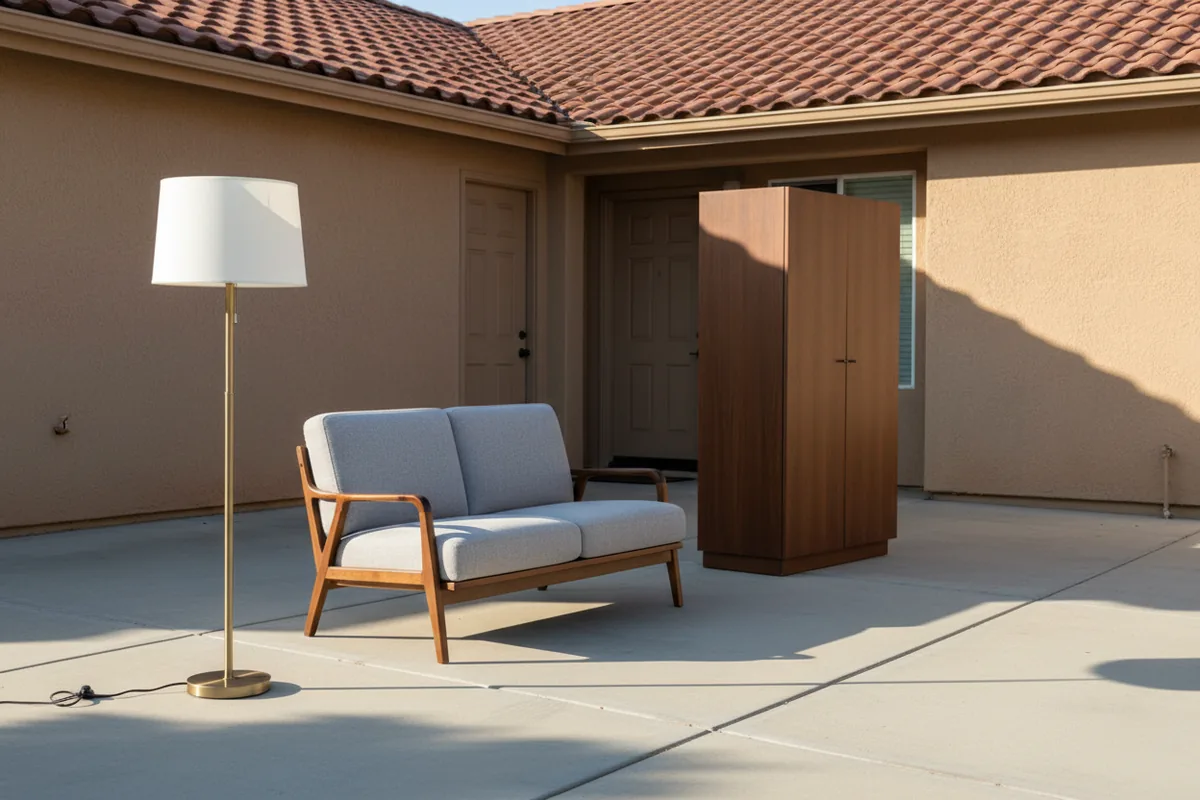
Junk removal pricing in San Diego County is set job by job, in a written quote. The price usually reflects five things: how much material there is, how heavy it is, which items need special disposal, how easy the items are to reach, and when the work is wanted. No single rate fits every load.
On this page
What Junk Removal Covers
Junk removal means loading unwanted items at a property and taking them away. Hauling is the transport part: carrying the load from the property to wherever it is dropped off, recycled or disposed of. A cleanout is the clearing of a whole space, such as a garage, a rental unit or an entire home, and it may involve sorting as well as loading.
A single-item pickup and a full cleanout are priced differently because they are different jobs. One old couch is a short, defined task; a house full of mixed belongings is a larger one.
Loads usually fall into a few categories:
- Furniture: couches, tables, dressers and beds.
- Appliances: refrigerators, washers, dryers and similar household machines.
- Electronic waste: discarded electronics such as televisions, computers and monitors.
- Construction and demolition debris: leftover building material such as drywall, concrete, lumber and roofing.
- Green waste: yard material such as trimmings, branches and soil.
- Household hazardous waste: leftover household products that are toxic, flammable or corrosive, such as paint, solvents, pesticides and batteries.
What is accepted, recycled or handled under special rules varies by category, and that variation shapes the price. More background on the service itself is in the guide to junk removal in San Diego County.
When Junk Removal Makes Sense
Junk removal is typically used for jobs that are large, heavy or mixed: estate cleanouts, garage cleanouts, move-outs, renovation debris, and single items too bulky to carry alone.
Two other routes may fit some jobs:
| Route | What it involves | Trade-off |
|---|---|---|
| Self-hauling | Driving items to a transfer station (a facility where loads are dropped and sorted before final disposal or recycling) or a landfill | Requires a suitable vehicle, time, loading help, and knowing what each facility accepts |
| A city's bulky-item pickup | Curbside collection of large household items, a bulky item being anything too large for a regular trash cart | Each city's program sets what it takes, how many items and when |
| Junk removal | A hauler loads and carries the items away | Labor is included and priced in the quote |
A city's program sets its own terms, and the city states what it accepts; the guide to junk removal in San Diego looks at the City of San Diego in particular. Which route fits depends on the volume, the item types, access and timing.
Items That Need Special Handling
Certain items leave a property on a separate track, and that track can change the cost of a load. Mixed together, they can complicate a job that is otherwise simple.
- Household hazardous waste: paints, solvents, pesticides, batteries and fluorescent bulbs are kept apart from ordinary junk. The county or city program that collects them states what it accepts and where.
- Electronic waste: televisions, computers and monitors are handled as electronics rather than as general trash. The program that receives them confirms its terms.
- Appliances with refrigerant: refrigerators, freezers and air conditioners contain cooling chemicals that are dealt with before the appliance is disposed of.
- Mattresses: these often go through a separate channel; the guide to mattress removal in San Diego County explains one drop-off option.
- Tires: these are handled apart from household junk, and the county or city program confirms where they go.
- Construction and demolition debris: this is often handled separately from household items and may go to a different facility.
- Green waste: yard material is typically separated from other loads.
- Paint: leftover paint is treated as a special item rather than as trash.
How any rule applies to a particular item is for the agency or program named on its official page to confirm. A hauler's quote notes which items it handles and how.
What Affects the Price
Volume comes first. The amount of material, often described as a share of a truck load, sets the base of most quotes. Weight matters too: dense material such as concrete, soil and tile fills less space but is heavier to carry and dispose of than furniture or boxes.
Item types add their own costs. The special-handling items described above can carry separate disposal charges that appear in the quote.
Access shapes the labor. Stairs, narrow hallways, elevators, gated entries and the distance from the items to the curb all change how much carrying a job takes.
Disposal costs depend on where the load goes. Each transfer station and landfill in San Diego County sets its own rates, and a quote reflects the facility that receives that load.
Timing also plays a part: the date wanted, and whether the job takes more than one trip.
A quote may include a minimum charge for small loads. Because volume is usually measured as a share of a truck load, a minimum charge generally reflects the smallest portion of a load the hauler will take on. The written quote is where the actual figure is set out.
How to Get Ready
A quote is only as accurate as the description behind it. This checklist covers what to gather:
- List the items. Note each item or material and a rough quantity.
- Flag special items. Mark anything from the special-handling list above.
- Note the access. Record stairs, elevators, parking, gated entry and any homeowners association rules.
- Write down the timing. Include a preferred date or a fixed deadline such as a move-out date.
- Take photos. Pictures of the space or the pile help a hauler judge the volume.
- Set aside what stays. Pull out papers, keepsakes and anything a family member may want before anything is loaded.
What to keep is a personal call, and there's no rush on keepsakes; sorting them can wait until the rest of the space is clear.
Mistakes to Avoid
The most frequent cause of a changed price is a special-handling item that shows up on the day without being mentioned beforehand. When that happens, the quote may be revised.
- Underestimating the volume. A partial description leads to a quote for a smaller job than the real one.
- Assuming curbside pickup covers everything. City programs set item limits and schedules, and large or restricted loads can fall outside them.
- Mixing separately handled items into the general pile. Sorting them out later adds work.
- Skipping the access check. A truck that cannot reach the items may mean extra carrying or a different vehicle.
- Leaving it to the last day. A tight move-out or estate deadline narrows the dates available.
Many people find a walk through the space with a notepad and a phone camera helpful, along with a look at the city's own bulky-item and household hazardous waste pages, so the list shared with a hauler matches what is there.
Ready for a quote?
Add the items, the address and your timing.
Get my junk removal quoteFrequently asked questions
What is the minimum cost for junk removal?
A small load may carry a minimum charge, and its amount is set out in the written quote. It depends on the hauler, the items and access, so no single figure applies across San Diego County.
How much are dump fees in San Diego?
Each facility sets its own disposal fees under its current rate schedule. A hauler's quote reflects the disposal cost for the specific load and the facility that receives it.
Is it cheaper to get a dumpster or go to the dump?
Neither is cheaper for every job. A rented container suits a project where debris builds up over time; a junk removal job suits a one-time haul with loading included; self-hauling trades a fee for a personal vehicle, time and labor.
What items cannot go in a regular junk removal load?
The items in the special-handling section above, such as household hazardous waste and electronics, are handled apart from ordinary junk. The county or city program for each confirms how it applies, and a quote notes which items fall outside a standard load.
Does junk removal pricing in San Diego vary by city?
Yes, in the sense that the facility receiving a load and the access at each address differ across San Diego County. Both are reflected in the quote for a specific property.
What is the difference between junk removal and a cleanout?
Junk removal usually means hauling away a defined set of items. A cleanout clears an entire space and may involve sorting, many item types and special-handling materials, so it is generally a larger job and quoted that way.