You may be looking at a garage you have not parked in for years, or at a parent's garage, a rental's garage or a property you manage. What decides how things leave the garage is what is actually in it, how much there is, how easy it is to reach, and which items need handling outside an ordinary hauling load. Your keepsakes and your decisions about them come first. The hauling can wait until those choices are made.
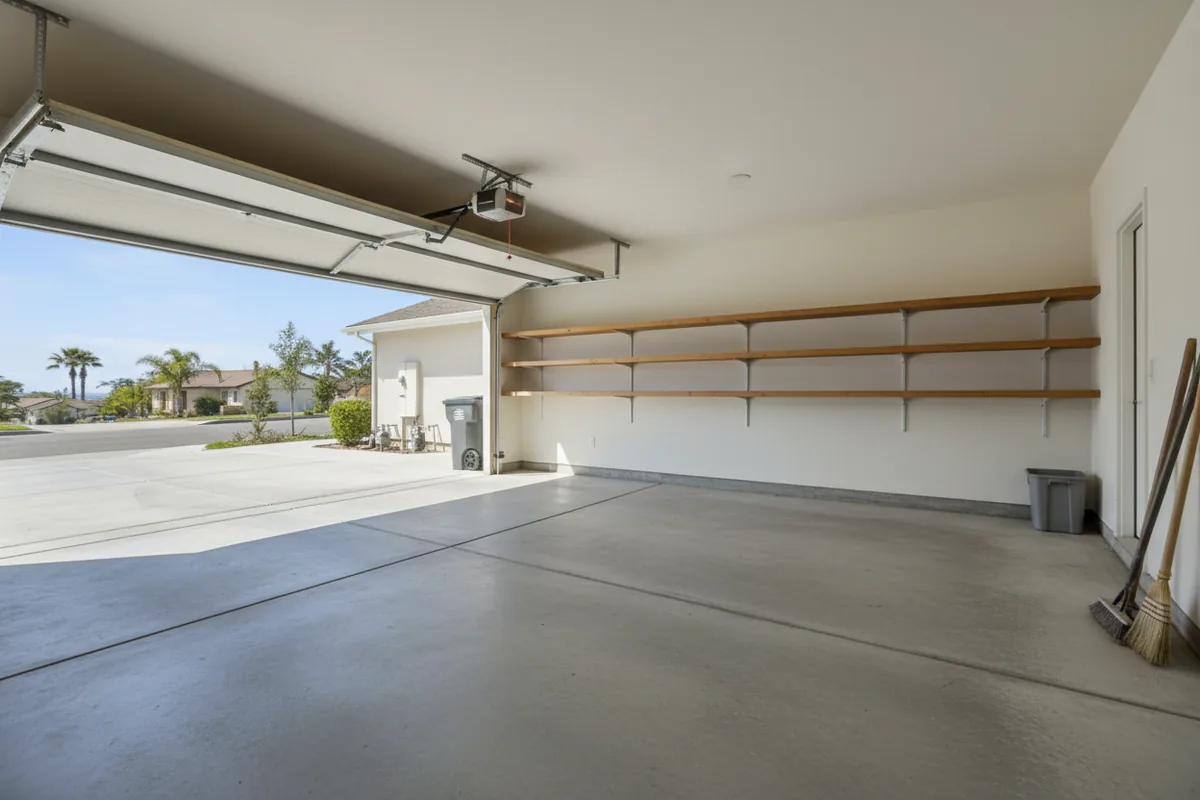
A garage cleanout in San Diego County is a hauling service that clears a garage of boxes, old furniture, tools, broken equipment, appliances and general clutter. The price is set in a written quote for that specific garage. Paint, batteries, electronics, tires and similar items usually follow separate disposal paths, so they are sorted out first.
On this page
Key Takeaways
- A garage cleanout covers boxes, furniture, tools, appliances, sporting goods and general clutter, not just loose junk.
- The items present decide the paths they take: general disposal, separate handling for things like paint, batteries, electronics, tires and mattresses, or donation when an item is in usable condition.
- No fixed rate applies to every garage. A written quote sets the price based on item types, volume, weight, access and disposal path.
- The County of San Diego confirms current household hazardous waste drop-off options, locations and hours.
- Sorting and setting items aside before pickup day keeps the work focused on what is actually going.
- Availability is confirmed for each property in San Diego County.
What This Service Covers
Junk removal is the loading and taking away of unwanted items from a property. Hauling is the transport of that load to the places that receive it. A garage cleanout applies both to one space: the accumulated contents of a garage are removed so the room can be used again. For the wider picture of a pickup, see junk removal in San Diego County.
A garage cleanout generally includes:
- Boxes, bins and bagged clutter
- Old furniture and bulky items, meaning things too large for a regular trash cart
- Hand tools, workbenches, shelving and broken equipment
- Sporting goods, bikes and exercise equipment
- Appliances, with separate handling for units that contain refrigerants
- Leftover building material, also called construction and demolition debris: wood, drywall, tile and similar scraps from projects
Some categories are handled outside a standard load. Household hazardous waste is household material that is flammable, corrosive or toxic, such as paint, solvents, pesticides and many batteries. Electronic waste, or e-waste, means discarded devices such as computers, monitors and TVs. Tires and mattresses also tend to have their own disposal paths. Flammable, corrosive or toxic items are generally not part of a hauling load. What a particular hauler accepts is set out by that hauler, and it is worth having that in writing.
Ordinary items usually go to a transfer station, which is a facility where loads are dropped, sorted and sent on, or to a landfill. Some items in usable condition may go to donation. Neither outcome is promised for any item.
How Pickup Works, Step by Step
The sequence below describes how garage cleanouts generally run. Timing, and the details of how the work is carried out on the day, depend on the job and are agreed for each one.
- Quote request. A quote request typically asks about the kinds of items, a rough count or volume, how the garage is reached, the timing, and anything that may need special handling.
- The written quote. The quote spells out what is included, what is excluded, what drives the price, and what happens if the load turns out larger or smaller than described. You read it and decide whether to agree.
- Preparing the garage. Items are sorted into keep, donate, recycle and remove. Papers and keepsakes are set aside, and the keep pile is clearly marked.
- Pickup day. The hauler loads and removes the agreed items. Driveway width, steps, a gated entry and any association rules affect how the work goes.
- After removal. The garage is cleared of the agreed items. Anything needing special disposal, such as household hazardous waste or e-waste, follows a separate path, covered under What Happens to the Items.
A scope agreed in writing, including which items stay, keeps the keep pile safe and the load clear.
What Affects the Price
Garage cleanouts are priced by the job, not by a posted rate. These factors usually shape a written quote:
| Factor | Why it matters |
|---|---|
| Volume | More material takes more truck space and more loading time |
| Weight | Heavy loads such as tile, concrete, appliances and dense boxes add to disposal charges |
| Item types | Mattresses, tires, e-waste and appliances with refrigerants follow separate paths that can add cost |
| Access | A clear, ground-level garage near the street means less labor. Stairs, narrow side yards, gates and tightly packed items mean more |
| Disposal path | Receiving facilities charge for what they take, and that charge is reflected in the quote |
| Timing | Scheduling and availability affect what a hauler can offer |
A written quote that is useful to compare typically names the following:
- The items or the space it covers
- Whether loading, sweeping and haul-away are included
- How special-handling items are treated
- What happens if the load turns out larger or smaller than described
That last point matters in a garage, where boxes stacked at the back can hide more than a first look suggests.
What Happens to the Items
Where each item ends up depends on the item, its condition and what the receiving facilities accept. Nothing here is a promise of donation, recycling or keeping anything out of a landfill. For the special categories below, the receiving facility, the county program or the hauler has the final word on what is accepted and how.
General items. Furniture, boxes, tools and non-hazardous debris typically go to a transfer station or landfill. Items in usable condition may go to a donation facility when one accepts them.
Household hazardous waste. Paint, solvents, pesticides, batteries and fluorescent bulbs belong in this category. The County of San Diego is the office that sets current drop-off options, locations, hours and accepted materials.
Electronic waste. California law governs how e-waste is handled. E-waste recyclers and county programs are the usual channels for these items.
Tires. Tires are handled apart from ordinary trash, through the hauler or a county program.
Mattresses. Mattresses have their own disposal and recycling channels. Drop-off terms are explained under mattress removal in San Diego County.
Appliances with refrigerants. Refrigerators, freezers and air conditioners contain refrigerants that call for proper handling under federal and state rules, and the hauler or receiving facility handles each unit accordingly.
How to Get Ready
Getting ready is mostly about your own decisions: what stays, what goes, and what needs a separate path. Most people find it easiest to start by sorting everything into four groups: keep, donate separately, recycle separately and remove. That way only the agreed items leave.
Old boxes in a garage can hold documents, photos and family items worth a second look, so papers and keepsakes are worth setting aside early. Once an item is loaded, it is gone, which is also why anything with resale or donation value is worth spotting before pickup day.
A few groups are kept out of the hauling load altogether:
- Household hazardous waste. Paint, batteries, solvents and pesticides go to a drop-off program.
- Electronics. Computers, TVs and monitors follow their own handling path.
On the practical side, pickup day goes more smoothly when:
- The path is clear. Vehicles and obstacles are moved so the driveway and garage door are open.
- Access details are written down. Gate codes, association rules, parking limits, steps and any delicate flooring.
- The decision-maker is named. The person with authority over the property and its contents agrees the scope.
- Photos and a rough list are ready. These help the hauler prepare an accurate written quote.
Service Area
This site's service area is San Diego County, California. Garage cleanout requests may come from communities across the county, including:
San Diego, Chula Vista, El Cajon, Escondido, Oceanside, Carlsbad, Vista, San Marcos, Santee, La Mesa, National City, Lemon Grove, Poway, Lakeside, Spring Valley, Bonita, Coronado, Imperial Beach, Del Mar, Solana Beach, Encinitas, Cardiff, Leucadia, Rancho Santa Fe, Ramona, Alpine, Jamul, Bonsall, Fallbrook and Valley Center.
Availability is confirmed for each property. This site's service area does not extend to properties outside San Diego County.
A practical next step is a few photos of the garage, a rough count of large items, and a note of anything that might be hazardous. That gives the quote request something concrete to work from.
Ready for a quote?
Add the items, the address and your timing.
Get my junk removal quoteFrequently asked questions
How much does it cost to get a garage cleaned out in San Diego?
The cost depends on the volume and weight of the items, the item types, the access conditions and the disposal path. A written quote sets the price for a specific garage and load. The factors are described in What Affects the Price.
How do I dispose of large items in San Diego County?
Large items can be removed by a hauling service, taken to a transfer station, or donated when they are in usable condition and a facility accepts them. Appliances with refrigerants and items with hazardous parts follow separate handling, as described in What Happens to the Items.
What items cannot go in a standard garage cleanout load?
Household hazardous waste, e-waste, tires and appliances with refrigerants generally need separate handling. Each hauler sets out what it accepts, and having that in writing before pickup day avoids surprises.
How much does junk removal cost in San Diego?
No single rate applies to every load. A written quote sets the price based on item type, volume, weight, access and disposal path.
Can I get rid of paint and batteries during a garage cleanout?
Paint and batteries are household hazardous waste and are kept out of a standard hauling load. They go to a County of San Diego drop-off option instead.
What should I do with electronics found during a garage cleanout?
Electronics are typically set aside for separate handling. California law governs e-waste, and e-waste recyclers or county programs are the usual channels.
Do I need to sort items before the hauler arrives?
Sorting is not required, but it typically keeps the work focused on what is actually leaving. It protects your keep pile and may affect the quote. Setting aside hazardous items and electronics also keeps them on their own path.
Does a garage cleanout service cover the whole San Diego County area?
This site's service area is San Diego County, and availability is checked when a quote is requested.