A pile of torn-out cabinets in the driveway or a garage stacked with broken drywall raises practical questions. What will a hauler take? What has to be set aside first? Who decides where it all ends up? The answers depend on what the debris is made of, how much there is, how it is reached, and the rules of the place it goes. This page walks through each of those in order, so the space can be cleared with nothing kept that should go and nothing lost that should stay.
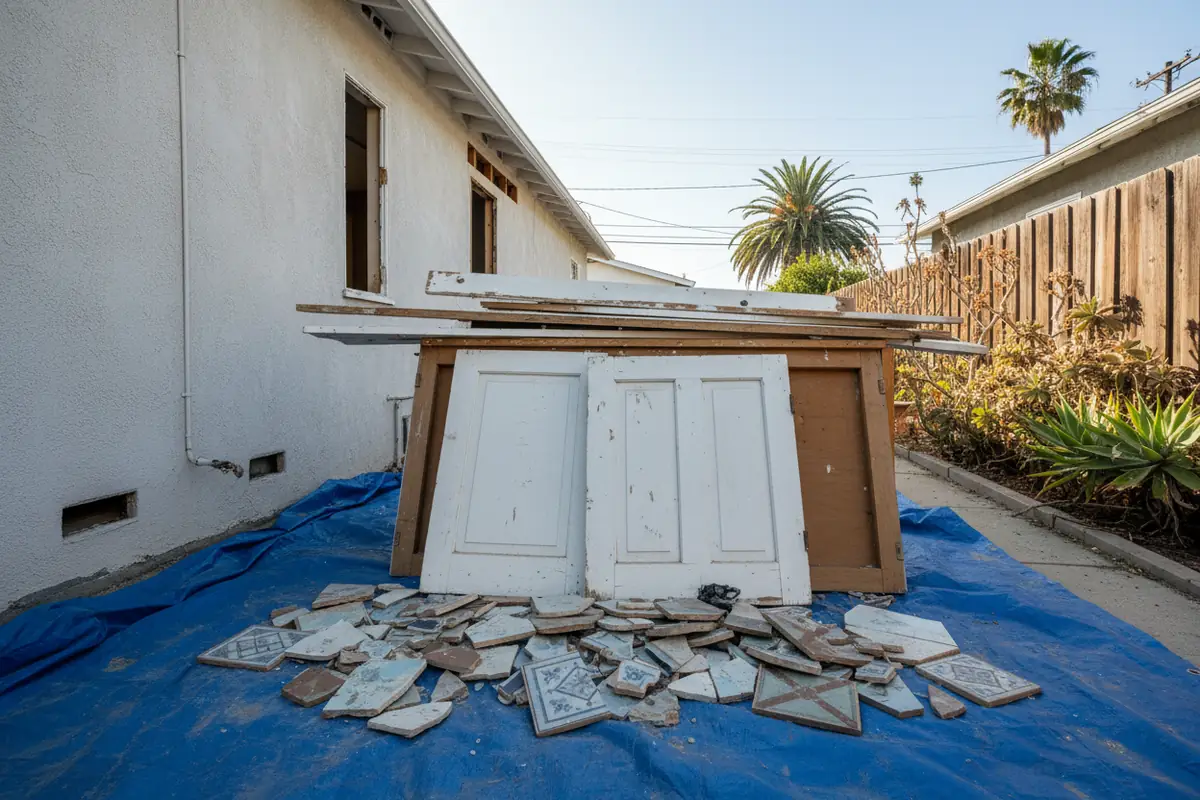
Construction debris removal is a hauling service for the drywall, lumber, tile, cabinets, concrete and other leftovers from a remodel, repair or build. A hauler loads the material at the property and takes it away for sorting, recycling or disposal. What gets accepted, and where it goes, is set out in a written quote for that load.
On this page
Key Takeaways
- Construction and demolition debris, often shortened to C&D debris, is usually heavier than household clutter, is often sorted by material, and may be routed differently from a general junk removal load.
- Three routes typically come up: hauler-based removal, debris box rental and self-haul. The comparison below sets out how they differ.
- Paint, solvents, adhesives, fluorescent bulbs, asbestos-suspect material and lead-paint debris sit outside a standard load and follow their own routes.
- State and local recycling rules can apply in San Diego County, and the local city or county office is the place that confirms them.
- What a hauler accepts, how a load is sorted and where it goes are confirmed in the written quote for that load.
Hauling, a Debris Box or Self-Haul
C&D debris is the mixed material left after building, remodeling or tearing down part of a structure: drywall, lumber, concrete, tile, roofing, cabinets and fixtures. Three routes typically handle it:
- Hauler-based removal. A hauler loads and takes the debris away. This is the service this page covers.
- Debris box rental. A debris box, also called a roll-off dumpster, is an open container left at the property, filled over time, then picked up.
- Self-haul. The owner or contractor drives the material to a facility that accepts it.
| Point of comparison | Hauler-based removal | Debris box rental |
|---|---|---|
| Who loads the debris | The hauling crew | The owner, contractor or crew on site |
| How long it stays | Loaded and removed at the pickup | Sits at the property while it is filled |
| Space needed | Access to the debris pile | Room for the box on the driveway or street |
| Fits | One-time loads, tight sites, finished projects | Ongoing work that produces debris in stages |
Some projects use both: a box during demolition, then a hauler for the last odd loads once the box is gone.
What This Service Covers
Most remodel leftovers fit one of these material categories, and a quote request names which ones are in the pile:
- Drywall and plaster
- Lumber and dimensional wood, including framing offcuts and old decking
- Concrete, brick, block and other masonry
- Ceramic, porcelain and stone tile
- Roofing materials such as shingles and underlayment
- Cabinets, countertops and millwork
- Flooring, including carpet, laminate, vinyl and hardwood
- Metal framing, ductwork and pipe
- Windows and doors
- Insulation
The debris usually comes from a specific project. Kitchen and bathroom remodels, room additions, roof replacements, flooring replacements, full gut-outs down to the studs, and cleanup after new construction are all typical sources. Mentioning the source in a request tells the hauler what mix of materials to plan for.
Some materials typically sit outside a standard C&D load: household hazardous waste, asbestos-suspect material and lead-paint debris. The section on where materials go describes each one.
A mixed load is one where construction debris is combined with household items such as an old sofa, boxes or a broken appliance. It may be handled and quoted differently from a pure C&D load, and the hauler confirms how.
How Pickup Works, Step by Step
The sequence below is how a construction debris pickup generally runs. The details for a given property come from the hauler and the written quote, and how junk removal works follows the same general shape.
- Request a quote. A request typically asks for the material types, a rough estimate of the amount, how the debris is reached, any hazardous or special-handling items, and the timing that suits the project.
- Review the written quote. The quote sets out what is included, what is excluded and what could change the final figure. No price is set before the quote exists.
- Schedule and confirm access. Parking, gate codes, elevator reservations and any building or homeowners association rules are confirmed before the pickup date.
- Load on the day of pickup. Debris is typically staged at or near the curb, a driveway or another agreed access point. The crew carries or wheels it out, loads it, and leaves the work area swept or cleared to the extent the quote describes.
- Haul for disposal and recycling. Materials go to a transfer station, a recycling facility or a landfill depending on their type and the rules that apply. A transfer station is a facility where loads are dropped, sorted and sent on to recyclers or a landfill.
What Affects the Price
A construction debris quote is built from several factors. Each one is described here in plain terms, and the figure itself appears only in the written quote. The junk removal pricing page covers the same factors for general loads.
- Volume and weight. C&D debris is typically heavier for its size than household junk. Concrete, tile and masonry add the most weight.
- Material type and sorting. Disposal charges at receiving facilities differ by material. A load sorted into clean wood, metal or concrete may be routed differently than a mixed pile headed to a landfill.
- Access. The distance from the pile to the truck, stairs, narrow side yards, gated entries, underground parking and elevator-only floors all add labor.
- Load preparation. Debris that is bagged, broken down or stacked loads differently than loose rubble spread through a room.
- Timing. The hauler confirms whether a requested date or window affects availability or the quote.
- Special-handling items. Hazardous products, electronics and appliances are typically quoted separately from the debris itself.
A useful written quote names each of these as it applies: the materials included, the access assumed, anything excluded, and what would change the figure if the load turns out larger or different on the day. Two quotes are easier to compare when both describe the same load in the same terms.
What Happens to the Items
Where construction debris goes depends on what it is, its condition, and what the receiving facilities accept. California and local jurisdictions in San Diego County have rules that favor recycling and reuse of construction materials over landfill disposal, and the local city or county spells out how those rules reach a given project.
In general industry practice, debris is often sorted along these lines:
- Concrete, brick and masonry go to recyclers that crush them into aggregate.
- Clean, unpainted wood goes to wood-waste processors.
- Drywall goes to gypsum recyclers where one accepts it.
- Metal framing, pipe and ductwork go to scrap metal recyclers.
These are general pathways, not a promise about any load. Material that is mixed, contaminated or not accepted by a recycler goes to a permitted transfer station or landfill. Whether a particular piece is recycled is decided by the facility, not by a quote request.
Household hazardous waste. This is the name for leftover products that are toxic, flammable or corrosive, such as paint, solvents, adhesives and fluorescent bulbs. These are kept apart from the debris. The San Diego County program or the local city program lists where those products may be taken and on what terms, and the City of San Diego guide describes what to check for addresses in the city.
Asbestos and lead-based paint. Materials that may contain asbestos go through a separate abatement process before ordinary removal. The San Diego County office responsible for air quality, or a qualified abatement professional, determines what testing and handling a suspect material needs. Lead-based paint debris is treated the same way, with the relevant county or state office setting the requirements.
How to Get Ready
A little sorting before the pickup keeps the load clear and the quote accurate. Each item below is one task.
- Separate the debris. Construction debris kept apart from household junk and electronics avoids a mixed-load quote.
- Set aside hazardous products. The household hazardous waste items described above go to a separate spot away from the pile.
- Flag asbestos-suspect material. Popcorn ceilings, old floor tiles and pipe insulation in older structures are noted in the request and left undisturbed.
- Stage the debris near access. Debris placed as close to the street or agreed access point as is safe keeps the access portion of the quote simple.
- Check staging and bin rules. Homeowners association rules, building management rules and city rules may limit where debris or a box sits. A street-bin permit is a city permit to place a debris box in a public street, and the city's right-of-way office decides whether one is needed.
- Estimate the amount. A load can be described by rooms cleared, rough cubic yards, or a pickup-truck comparison, with photos if the request allows them.
- Note access limits. Locked gates, parking restrictions and elevator-only floors go in the request.
- Settle the keep list. Tools, spare tile for future repairs, hardware and any fixture being reused are pulled out before loading.
For a general load, the junk hauling page has a similar checklist. Once anything needing its own disposal route has been set aside, the debris left over is what a quote describes.
Service Area
This site's service area is San Diego County, California. Requests can come from properties across the county, and availability is confirmed for each property at the time of the request, not promised for any address.
In the south county, that includes Chula Vista, National City, Coronado, Imperial Beach, San Ysidro and Bonita. East county communities include El Cajon, Santee, La Mesa, Lemon Grove, Spring Valley, Lakeside and Ramona. To the north, it includes Poway, Escondido, San Marcos, Vista, Oceanside, Carlsbad, Encinitas, Solana Beach, Del Mar and Rancho Santa Fe.
Within the City of San Diego, requests can come from Carmel Valley, Mira Mesa, Kearny Mesa, Mission Valley, North Park, Hillcrest, Ocean Beach, Pacific Beach, Mission Beach, La Jolla, Point Loma, Clairemont, Linda Vista, the College Area, East San Diego, Barrio Logan and Logan Heights.
Each city sets its own rules for debris staging, bins in the street and recycling. For a property outside the county, this site's service area remains San Diego County.
Ready for a quote?
Add the items, the address and your timing.
Get my junk removal quoteFrequently asked questions
Where can I get rid of construction debris in San Diego?
The three routes described in the comparison section near the top of this page typically apply, with self-hauling going to a permitted transfer station or construction recycling facility. The San Diego County program and the City of San Diego's program pages identify permitted facilities and what each accepts.
How do I dispose of large items in San Diego?
Large construction items, such as concrete pieces, cabinets and lumber, go through a hauler, a debris box or a facility that accepts C&D debris. A bulky item is a large household piece such as furniture or an appliance, and it may qualify for a city's separate bulky-item program. The city's own program decides what it accepts.
What is included in a construction debris removal service?
The service typically covers loading and hauling drywall, lumber, tile, concrete, cabinets, roofing, flooring and metal from the property to a transfer station or recycling facility. Hazardous products, asbestos-suspect materials, electronics and general household junk are typically excluded or quoted separately. The hauler's written quote confirms the scope for a specific load.
What is the difference between junk removal and construction debris removal?
Junk removal usually covers household items such as furniture, appliances and clutter. Construction debris removal focuses on materials from building, remodeling or demolition work. Some haulers handle both. The material type and its weight affect how a load is quoted and where it goes, as described under price and disposal above.
What is the difference between hiring a hauler and renting a dumpster for construction debris?
A hauler loads and removes the debris at the pickup, while a debris box is filled over time and then collected. The comparison table near the top of this page sets out who loads, how long each stays and what each fits. Neither route's price is stated on this page.
Can construction debris go in a regular dumpster or trash bin?
Construction debris is generally kept out of residential trash carts, and mixing it with household waste may conflict with local disposal rules. The City of San Diego, or the city where the property sits, and the San Diego County program confirm what may go in a cart or a box at a given address.
Does San Diego have recycling requirements for construction and demolition debris?
California and local jurisdictions in San Diego County have requirements that favor recycling construction and demolition debris. The specific terms, including which projects they reach and what records they ask for, are set by the city where the work takes place and by the county. Those offices state the requirements that currently apply.
What construction debris cannot be hauled away in a standard removal?
Household hazardous waste, asbestos-suspect materials, lead-paint debris, electronics and tires typically need separate handling, as described in the section on where materials go. Asbestos-suspect material goes through abatement first. The San Diego County household hazardous waste program and the relevant city program state where these materials may go.
Do I need a permit to place a debris box on the street in San Diego?
Placing a debris box in a public street or right-of-way typically calls for a permit from the city. The City of San Diego's right-of-way or encroachment permit office, or the equivalent office in another city, confirms whether a permit is needed and on what terms. A box on a private driveway may fall under homeowners association rules instead.