You may be a lender's asset manager, a new owner, an agent or a property manager. Either way, you now hold keys to a house, condo or townhome full of someone else's things. Three questions decide how those things leave the property. Is your authority to remove them settled? Which items need their own disposal path? How are the spaces reached? This page takes each question in turn.
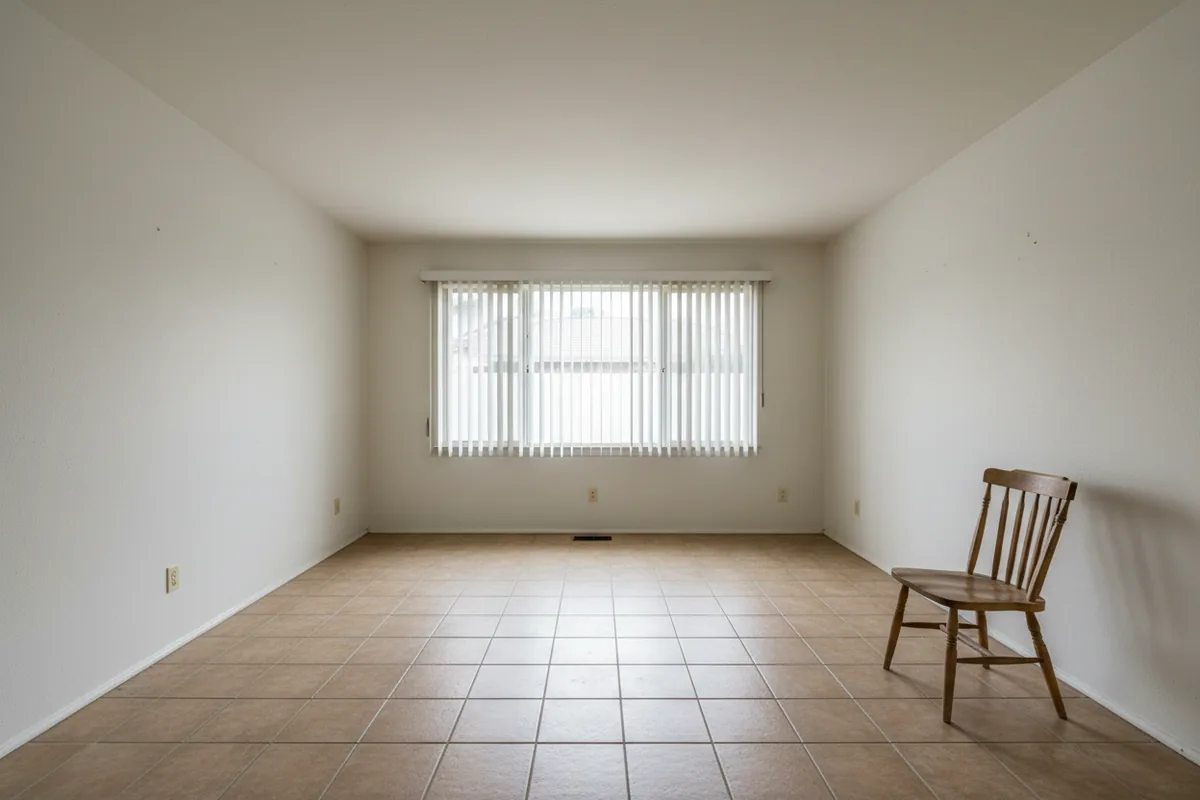
A foreclosure cleanout clears a vacant or bank-owned property in San Diego County of what the former occupants left behind. That can include furniture, appliances, clothing, papers, food waste, yard debris and leftover building materials. The work is usually done room by room. Items needing separate handling are sorted out, and the rest is hauled away.
On this page
What a Foreclosure Cleanout Covers
A standard junk removal job usually targets a few items or one space. A foreclosure cleanout often covers a whole household's contents, spread across bedrooms, closets, the kitchen, the garage and the outdoor areas. Hauling means loading these items and carrying them away to wherever they are accepted.
The categories typically found include:
- Furniture, beds and mattresses
- Kitchen and laundry appliances
- Clothing, linens and household goods
- Personal documents and photographs
- Spoiled food and household trash
- Yard debris and overgrowth
- Leftover construction materials from repairs
How much is left depends on how long the property sat empty and how it was vacated. A home left in an orderly way may hold only scattered items. One left in a hurry may hold nearly everything.
When a Foreclosure Cleanout Makes Sense
A foreclosure cleanout typically happens after the foreclosure is complete and the property has transferred to the new owner or the lender. Clearing the property is one task. What happens to the property afterward is a separate decision.
California law governs what may be done with personal property left behind after a foreclosure or an eviction. The rules that apply can differ depending on the facts:
- A property the occupants vacated on their own may be treated one way.
- A property cleared after an unlawful detainer case and a lockout may be treated another way.
An attorney confirms which rules apply to a specific property. That includes any notice or storage steps that come before items are removed.
The physical scope varies as much as the legal context. A house in Chula Vista, El Cajon, Santee or Escondido may have a garage, shed or yard to include. A condo in Mission Valley or National City may come with an assigned storage unit. Each space is worth confirming with the association or the paperwork.
Items That Need Special Handling
Some materials found in a vacant property do not go out with ordinary household junk. Each category below has its own channel, and the county or city program that receives the material confirms what it accepts and on what terms.
| Category | What it means | Who confirms disposal |
|---|---|---|
| Household hazardous waste | Paints, solvents, pesticides, pool chemicals, motor oil and similar products | San Diego County or city household hazardous waste program |
| Electronic waste | Televisions, computers, monitors and other electronic devices | The receiving facility or program |
| Appliances with refrigerant | Refrigerators, freezers, air conditioners and dehumidifiers that contain cooling gases | The receiving facility or program |
| Mattresses | Mattresses and box springs | The receiving facility or program |
| Tires | Car and truck tires | The receiving facility or program |
| Construction and demolition debris | Drywall, concrete, wood framing and roofing left from repairs or remodeling | The city or county construction and demolition debris program |
| Green waste | Yard trimmings, tree branches and soil | The city or county green waste program |
The site's mattress removal guide covers drop-off terms for one of these categories. Vacant properties often hold pool chemicals in a side yard or old paint cans on garage shelves. These items are easy to miss, which is one reason a walk through every space comes before the work.
What Affects the Price
The scope of the property drives the price, and a written quote sets it out once the details are known. These factors shape that quote:
- Volume and type of items: more items, and heavier or bulkier ones, mean more loading and more hauling.
- Access: stairs, narrow hallways, a gated community, association rules and the distance from the interior to the curb all change how the work is done.
- Special-handling items: each category in the table above follows its own disposal path, and each path can carry its own cost.
- Number of spaces: a property in Lakeside, Spring Valley or Rancho San Diego with a garage, shed, pool house or large yard involves more scope than a single unit.
- Condition: a property that sat vacant for a long stretch may have pests, mold or debris that affects what can be removed and how.
No single figure applies across properties.
How to Get Ready
A short walk-through and a few documents make the cleanout easier to scope. This checklist covers the preparation that typically comes first:
- Locate the authority document. The deed, trustee's deed upon sale or court order shows who may decide what leaves the property.
- Walk every space. Note each room, closet, attic, garage, shed, yard area and storage unit, so nothing is left out of the quote.
- Set aside sensitive items. Personal documents, financial records, prescription medications and firearms may call for separate handling or notice steps that an attorney confirms.
- Flag special-handling items. Note where each one sits.
- Check community rules. An association or building may set rules for bin placement, truck access and working hours.
- Check street-bin rules. A bin placed in the public right-of-way may fall under City of San Diego rules or San Diego County rules for unincorporated areas, and that office confirms what applies.
- Photograph the property. Pictures taken before and after the work record its condition.
Mistakes to Avoid
These errors tend to cause problems during a foreclosure cleanout:
- Clearing before authority is settled. Removing items before ownership or management authority is confirmed can create liability. Authority comes first.
- Treating special-handling items as trash. Putting household hazardous waste, electronics or refrigerant appliances in regular trash, without checking the receiving program's requirements, risks breaking disposal rules.
- Missing spaces. Attics, crawl spaces, sheds and garages often hold forgotten items and chemicals.
- Skipping the photographs. Without a record of the property's condition, a later dispute is harder to answer.
- Planning a single stream. Furniture, construction and demolition debris, hazardous materials and electronics take separate disposal paths. Treating them as one load complicates the work.
A practical next step is finding the trustee's deed or court order for the property, then raising with an attorney whether any notice requirements for personal property apply. The county recorder's office can help locate recorded documents.
Ready for a quote?
Add the items, the address and your timing.
Get my junk removal quoteFrequently asked questions
What is a foreclosure cleanout?
It is the clearing of what former occupants left in a vacant or bank-owned property once foreclosure is complete. Compared with a standard pickup, the job is usually larger, often covering a full household across several rooms, the garage and the outdoor areas.
Who is responsible for clearing a foreclosed property in California?
Generally, the new owner or the lender that took title is responsible once the property has transferred. California law governs what may be done with personal property left behind. An attorney confirms the specific obligations for a given property.
Can personal property left behind in a foreclosed home just be thrown away?
Not automatically. California law sets rules for how personal property left after a foreclosure or eviction is handled before disposal, and those rules can depend on how the property was vacated. An attorney confirms which rules apply.
What items cannot go in a dumpster or regular trash during a foreclosure cleanout?
Household hazardous waste, electronic waste, appliances with refrigerant, mattresses and tires each follow their own disposal path. The county or city program that receives a material confirms its requirements.
How is a foreclosure cleanout different from an eviction cleanout?
Both clear left-behind items. A foreclosure cleanout follows a transfer through the foreclosure process. An eviction cleanout follows a court-ordered removal of a tenant. The rules for left-behind property can differ between the two, and an attorney confirms which apply.
What affects the cost of a foreclosure cleanout in San Diego County?
The volume and type of items, access, the number of spaces, the property's condition and any special-handling items all shape the cost. A written quote sets out the price for the specific property.
Do I need a permit to place a dumpster or bin on the street in San Diego?
It depends on where the bin goes and where the property is. For the public right-of-way, the City of San Diego confirms the requirements inside city limits. San Diego County confirms them for unincorporated areas.