An office manager clearing a suite before a lease ends, a retailer taking down shelving, or a property manager facing a vacated unit all have the same practical questions. They need to know what can leave together, what needs its own route, and what to have ready so a quote matches the job. This guide works through each of those in order, for businesses and properties across San Diego County.
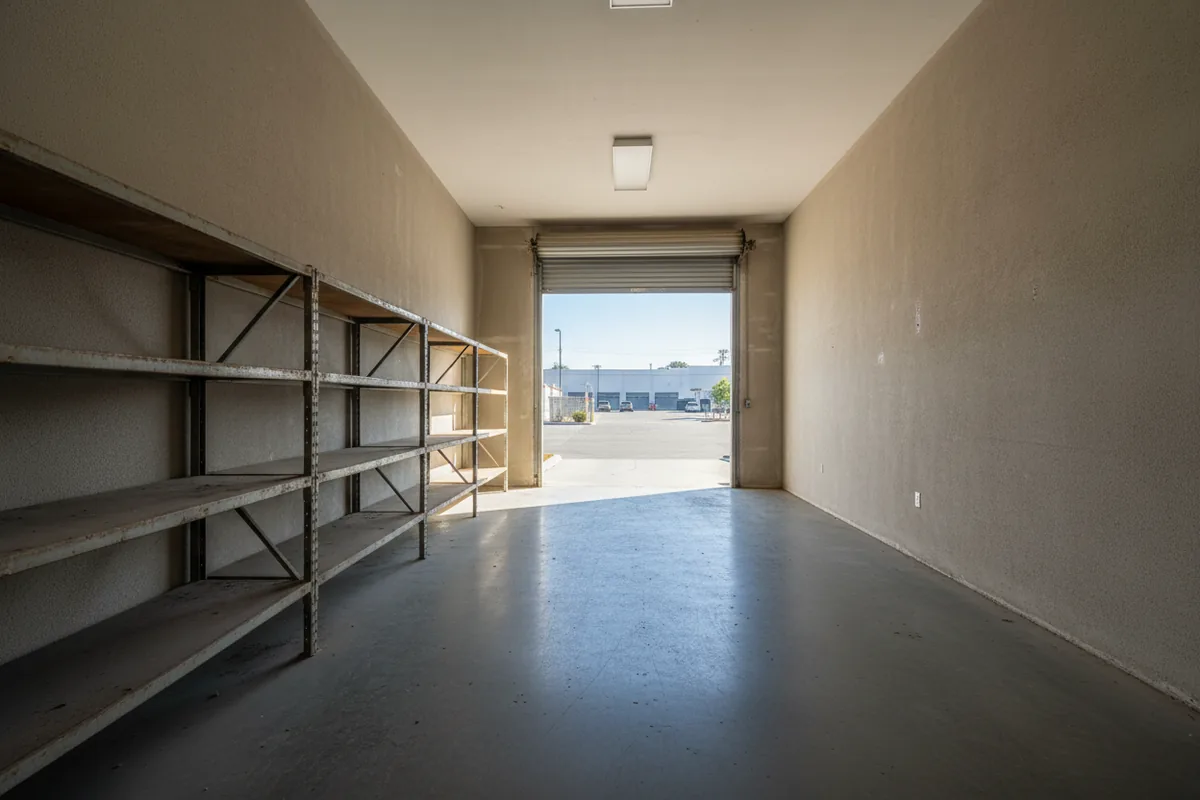
Commercial junk removal means a hauler loads and carries away unwanted furniture, fixtures, equipment and debris from an office, store, warehouse or storage unit. It is priced by written quote. Electronics, chemicals, refrigerant appliances, tires and construction debris may need separate handling, so those items are sorted out and confirmed before the pickup.
On this page
What Commercial Junk Removal Covers
Commercial junk removal is the hauling away of unwanted items, furniture, fixtures, equipment or debris from a business, office, retail space, warehouse or storage unit. Hauling means loading and transporting the material. A cleanout is the full clearing of a space rather than a single-item pickup. The general steps match residential work, and the junk removal basics apply here too. The differences are in volume, the kinds of items, and access: loading docks, freight elevators, building rules and shared parking.
The main categories are:
- Office furniture: desks, chairs, filing cabinets, conference tables.
- Retail fixtures: shelving, display cases, counters.
- Warehouse and storage-unit contents: racking, surplus inventory, packed boxes, equipment.
- Break-room appliances: refrigerators, microwaves, water coolers.
- Electronics: computers, monitors, printers.
- Construction and demolition debris: drywall, flooring, framing and similar material left from a tenant improvement.
- Green waste: plant trimmings and wood waste from commercial landscaping.
San Diego County includes many cities, among them Chula Vista, El Cajon, Escondido, Oceanside, Carlsbad, La Mesa and Coronado. Access conditions depend on the specific address and building, so they are checked property by property.
When Commercial Junk Removal Makes Sense
The usual situations are tied to a change in the space:
- Relocation or closure: clearing an office or store before a lease ends or a new tenant moves in.
- After a buildout: removing construction and demolition debris left by a tenant improvement.
- Storage-unit cleanout: clearing accumulated inventory, equipment or records.
- Liquidation or downsizing: removing surplus furniture, fixtures and equipment when a business shrinks its footprint.
- Property management: a landlord or manager clearing a vacated commercial suite.
A full-service haul is different from a roll-off container, which is a large open bin delivered to the site that the business fills itself. Both exist in San Diego County. Hauling suits a job where someone else does the lifting and carrying. A roll-off suits a job where staff can load over time and there is room to place the bin. The trade-off is labor against space and placement rules.
Regular trash and recycling collection for a commercial property is a separate matter from a one-time removal. In the City of San Diego, the Environmental Services Department is the office that determines which haulers may provide ongoing service to a business. Other cities in the county each set their own arrangement through their solid-waste office. The distinction matters because a one-time cleanout and a standing collection contract are handled through different channels.
Items That Need Special Handling
The categories below may not go out with general office junk. They are separated because each one travels a different route after pickup, and mixing them in can hold up an entire load. The terms are defined in plain words here; the program listed in the right-hand column is the source for which rules apply to a particular item, quantity or business.
| Category | What it includes | Who confirms handling |
|---|---|---|
| Electronic waste | Covered electronic devices: in plain words, televisions, computer monitors, laptops and similar devices with screens, plus printers and other electronics | The city or county program |
| Hazardous materials | Paint, solvents, batteries, fluorescent lamps | A specialized hazardous waste handler |
| Refrigerant appliances | Refrigerators, freezers, air-conditioning units | The hauler and the agency that oversees refrigerant recovery |
| Mattresses | Mattresses and box springs, including those from hotels or staff housing | The program or facility that accepts them |
| Tires | Waste tires from fleet or shop use | The state or local tire program |
| Construction and demolition debris | Material from building, remodeling or demolition | The City of San Diego or the county, depending on the project's location |
| Green waste | Plant trimmings and wood waste from landscaping | The city's or county's green waste program |
Electronic waste is discarded electronics. Household hazardous waste is the home version of the chemical category above. A business generating similar material has its own channel. Mattress options are covered in more detail in the guide to mattress removal in San Diego. For construction and demolition debris, any diversion or recycling requirement on a project comes from the city or county office overseeing it, which is why the project's location matters.
What Happens to Items After Removal
Material leaves a commercial space by more than one path. General junk goes to a receiving facility, such as a transfer station, where loads are sorted and consolidated before disposal or recycling. Items in the special-handling table go through their own programs instead. Diversion and recycling requirements, where they apply to construction and demolition debris, are one reason sorting happens before the truck is loaded. Furniture, equipment or stock with resale or donation value can be set aside before the pickup so it does not end up in the load at all. A hauler can describe where its loads go, and that description is part of comparing one service against another.
What Affects the Price
A commercial quote is built from the job itself, and the junk removal pricing guide explains the general structure. The main factors are:
- Volume and weight: more pieces or heavier material change the quote.
- Item types: items that need special handling may be quoted separately or left out.
- Access: elevator access, a loading dock, stairs, the distance to the curb, and parking limits in downtown San Diego or busy commercial corridors.
- Location in the county: the distance from the property to the receiving facility.
- Labor: how many people the job needs and how long they spend on site.
- Disposal fees: each receiving facility sets its own fees, and those fees can change.
None of these produces a figure on its own. A written quote for the specific space and items is how a business gets a figure it can plan around, and it is the cleanest way to compare one option against another.
Timing and Scheduling
Turnaround depends less on the hauling itself than on the steps around it. Elevator reservations, building approvals, loading dock hours and storage-facility access rules all take lead time, and any one of them can set the date. A pickup tied to a lease end is easier to schedule when those pieces are lined up well before the last day. Availability on a particular date, including short-notice requests, is something each hauler states when it quotes the job.
Checking a Hauler Before the Job
A commercial building often has its own requirements before any hauler enters. Some multi-tenant buildings require a certificate of insurance or a work order, so a hauler's ability to provide that paperwork matters as much as its price. Other points a business commonly confirms in writing:
- Insurance documentation: whether the hauler can supply what building management asks for.
- Accepted items: which categories from the table above the hauler takes, and which it leaves out.
- Where loads go: how the hauler handles sorting, recycling and disposal.
- Written quote: a figure on paper rather than a spoken estimate.
Licensing and permit questions for hauling and collection in the City of San Diego are handled by the Environmental Services Department, and by the relevant city office elsewhere in the county.
How to Get Ready
Preparation shapes both the quote and the removal day. The how junk removal works guide covers the general steps; these are the commercial ones:
- Special items grouped apart: electronics, chemicals and refrigerant appliances kept separate from general junk.
- Building requirements on file: any certificate of insurance or work order a multi-tenant building requires.
- Loading access noted: loading dock hours, elevator reservations and street-parking limits at the address.
- Keep items tagged: furniture, equipment or stock with resale or donation value marked, because a quote covers only what is being removed.
- Records pulled: files, contracts and anything with customer or employee information removed from the load before the pickup.
- Storage-unit rules checked: the facility's access hours and whether it requires advance notice.
Keepsakes, records and decisions about what to keep can come first. The rest of the removal can wait until those are sorted.
For businesses in the city limits, the San Diego city guide describes what to check about access. The practical next step is gathering the address, a description of the items, an approximate count of pieces, and any access constraints from building management. Having those details together lets a quote reflect the actual job.
Mistakes to Avoid
The errors below tend to show up on removal day as delays or quote changes:
- Assuming everything is accepted. Electronics, chemicals and certain appliances may need separate arrangements, and confirming them early avoids surprises.
- Skipping building rules. Commercial condominiums and multi-tenant buildings may limit when and how haulers enter.
- Mixing chemicals with general junk. Paint, solvents and batteries packed in boxes of office items can complicate a removal.
- Leaving it to the last day of a lease. Elevator reservations, building approvals and scheduling all take lead time.
- Relying on a verbal estimate. A spoken figure can change when the actual volume or items differ from what was described.
- Treating a roll-off like a haul. A container placed on a public street may need a permit, and the City of San Diego, or the city where the property sits, decides that question.
Ready for a quote?
Add the items, the address and your timing.
Get my junk removal quoteFrequently asked questions
What types of businesses use commercial junk removal in San Diego County?
Offices, retail stores, restaurants, warehouses, medical offices and businesses with storage units use it. So do property managers clearing vacated suites. The common thread is a space changing hands, shrinking or coming out of a renovation.
Is commercial junk removal different from a dumpster rental?
Yes. With junk removal, a hauler loads and carries the items away. With a roll-off container, the business fills a delivered bin itself. Street placement of a bin is a city decision. Volume, timing and access at the property decide which option fits.
What items cannot go in a commercial junk removal load?
Several categories may need separate handling; the table above lists each one and the program responsible for it. What a particular hauler accepts is confirmed with that hauler before the removal date.
Does San Diego require a permit for commercial junk removal?
The City of San Diego's Environmental Services Department, or the relevant city's office, handles permits and hauler arrangements. That includes ongoing commercial collection. Street placement of a bin is a city decision.
How is commercial junk removal priced in San Diego?
Cost depends on volume, item types, access, location in the county and fees at the receiving facility. A written quote for the specific job gives the figure.
Can a business dispose of e-waste through a junk removal service?
Some haulers handle electronics separately, and that is confirmed with the hauler. The local program or the receiving facility sets how a business's electronic waste is handled.
What is a commercial cleanout?
A commercial cleanout is the full clearing of a business space, whether an office, retail suite, warehouse or storage unit. It removes all unwanted items, furniture, fixtures and debris, unlike a single-item pickup. It usually follows a lease ending, a closure or a renovation.
Does commercial junk removal cover construction debris from a tenant improvement?
It can include that debris. Any diversion requirement on the project comes from the city or county office overseeing it. What the hauler accepts is confirmed with the hauler.