You may be an executor, a trustee, a family member, a landlord or a property manager standing in a home full of someone else's belongings. Some of those things are keepsakes, some are papers that may matter later, and some are simply the contents of a household. The cleanout comes after those first decisions, and it handles only what is left once the family has chosen what stays. None of it has to be rushed, and the order of decisions remains with the family.
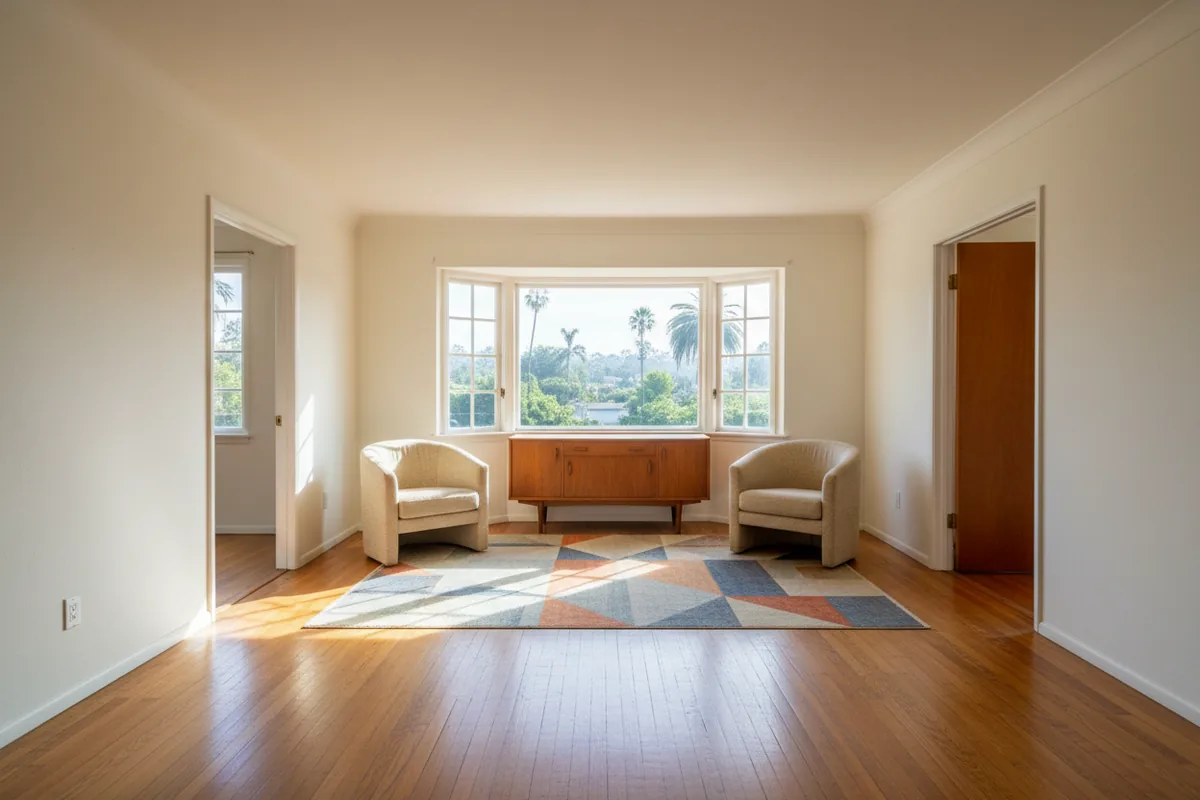
An estate cleanout in San Diego County is the room-by-room clearing of a home's remaining contents after the family has kept what matters. A hauler removes furniture, appliances, clothing, kitchenware and garage items. Paint, batteries and electronics are set aside for their own programs. A written quote based on the property sets the scope and cost.
On this page
Key Takeaways
- What it is. An estate cleanout clears an entire home's remaining contents, room by room, once the family has removed what it is keeping.
- How it differs from junk removal. Junk removal in San Diego County typically means hauling a single item or a defined load. A cleanout is organized around the whole property.
- What shapes the work. The number of rooms, the volume and type of items, and the access conditions decide how the cleanout is organized and quoted.
- What follows separate rules. Household hazardous waste, electronics and certain appliances are handled through their own channels, not in the general load.
- What can wait. Sorting keepsakes and papers comes first. The cleanout itself can be scheduled once those choices are made.
- What is not promised. No price, date or outcome is set until a written quote spells it out for the specific property.
What This Service Covers
The contents of an ordinary household make up the core of an estate cleanout. These usually include:
- Furniture: beds, sofas, dressers, tables, chairs and shelving.
- Appliances, noted by type when the quote is requested.
- Clothing, linens and shoes.
- Kitchenware, dishes and small household goods.
- Books, papers the family has already sorted, décor and framed items.
- Garage, shed and attic contents: boxes, tools, storage bins and old equipment.
- Outdoor items such as patio furniture, planters and stored yard equipment.
Many of these are bulky items, meaning large household items too big for standard curbside collection, such as a sofa or a mattress. Mattresses have their own disposal routes, which the mattress removal page explains.
Several categories sit outside a standard cleanout load:
- Household hazardous waste, meaning materials such as paint, solvents, pesticides and batteries that require separate drop-off or collection.
- Electronic waste, meaning televisions, computers, monitors and similar devices that are handled apart from general household contents.
- Construction and demolition debris, meaning drywall, lumber, concrete and tile left from renovation work. It is quoted as its own category.
- Green waste, meaning yard trimmings, branches and soil. It is also a separate category.
Each of these goes through its own program rather than standard hauling, and that program decides what it accepts. The list describes typical household contents and is not a complete list for any home.
How Pickup Works, Step by Step
Most estate cleanouts follow the same path from the first request to an empty home.
- Request a quote. The request describes what is in the home, roughly how much there is, how the rooms are reached, the timing that works for the family, and anything that may need special handling.
- The quote is prepared. It is built from that description: the scope, the volume, the access and the kinds of items. Photos or a walkthrough help pin the scope down more closely.
- Scheduling is confirmed. Once everyone agrees on the scope, a date is set for that specific property.
- The day of the cleanout. The crew typically works room by room, staging items, carrying them out, loading and hauling them away. Anything marked to keep stays exactly where the family left it.
- The property is left cleared. The rooms and spaces named in the written quote are emptied.
Access matters at every step. Stairs, narrow hallways, a gated entry, an elevator and parking near the door are all worth mentioning in the request. A condominium or a home in a community with an association may also have its own rules about moving hours or loading areas.
Spotting the items that need separate handling early, before the cleanout date, makes the scope clearer for everyone. The checklist below lists the usual ones.
What Affects the Price
No single price applies to every estate cleanout. Cost is set out in a written quote based on the specific property and its contents. These factors drive it:
| Factor | Why it matters |
|---|---|
| Volume of items | More contents mean more loading, more space on the truck and more disposal. |
| Type of items | Heavy furniture, appliances and small boxed goods each take different handling. |
| Number of rooms and property size | A full house with a garage and attic covers more ground than a single apartment. |
| Access | Stairs, distance to the curb, elevator availability and parking restrictions all add to the work. |
| Special handling | Items that need a separate disposal program can change how the job is organized. |
| Timing | The date the family needs and any scheduling limits at the property play a part. |
A helpful written quote makes a few things clear. It names the rooms and spaces included and anything left out. It explains how items needing special handling are treated. It also explains how the final cost is worked out if the amount in the home turns out to be different from what was described, so that a surprise on the day does not become a surprise on the bill. The person responsible for the property signs off on that scope in writing before the work starts.
Because the quote is built around the rooms and spaces the family names, it can cover the whole home or only part of it. Timing, likewise, comes down to the date the family needs and the limits at the property, and it is confirmed for that specific home rather than assumed in advance.
What Happens to the Items
Once items leave the home, they generally go one of three ways:
- Donation. Items in usable condition may go to donation, depending on what a receiving organization accepts.
- Recycling. Materials that can be recycled follow recycling streams, depending on the material and the facility.
- Disposal. The remainder goes to disposal.
No promise is made that any specific item will be donated, recycled or kept out of a landfill. Where something ends up depends on its condition and on what the receiving programs and facilities will take. When a family hopes a particular piece reaches a particular cause, arranging that donation directly before the cleanout is often the simplest route.
The separate categories described earlier follow their own channels. Household hazardous waste goes to the county or city collection program, which confirms what it takes and how. Electronics go to the program that receives them, which confirms how each device is handled. Mattresses follow the routes covered on the mattress removal page.
Through all of it, the family stays in control. Nothing leaves the home unless the people in charge have agreed it can go.
How to Get Ready
This checklist covers what typically helps the day go smoothly. Each step can happen at whatever pace the family needs.
- Remove what the family is keeping. Keepsakes, photographs and heirlooms are easiest to protect when they are out of the home or in one clearly marked room.
- Set aside important papers. Wills, deeds, bank statements, tax records and anything else that may matter to the estate stay with the person responsible.
- Make a keep list. A written list of what stays, room by room, gives everyone the same reference.
- Mark items to stay. Tape, tags or a closed door make it plain which pieces are not part of the cleanout.
- Gather household hazardous waste. Leftover paint, cleaning chemicals, garden products, batteries and propane tanks go in one spot, apart from everything else, for separate drop-off or collection.
- Gather electronics. Screens, computers and similar devices are grouped so they can go to their own channel.
- Note items needing special handling. Tires, propane tanks and similar items are listed when the quote is requested.
- Confirm who decides. One person with authority to approve the scope keeps instructions consistent.
- Record access details. Gate codes, lockbox details and key arrangements are written down for the day of the cleanout.
- Check parking and building rules. Parking instructions, elevator reservations and any association rules on moving hours are confirmed with the building or association.
Service Area
This site's service area is San Diego County, California, the full county. Requests come from places across it, including:
- City of San Diego communities: Carmel Valley, Rancho Bernardo, Mira Mesa, Kearny Mesa, Mission Valley, North Park, South Park, Hillcrest, Normal Heights, City Heights, Barrio Logan, Logan Heights, Golden Hill, Encanto, Skyline and Paradise Hills.
- South County: Chula Vista, Otay Ranch, Eastlake, National City, Bonita, Coronado and Imperial Beach.
- East County: El Cajon, Santee, La Mesa, Lemon Grove, Lakeside, Spring Valley, Rancho San Diego, Alpine, Jamul and Ramona.
- North County: Poway, Escondido, San Marcos, Vista, Oceanside, Carlsbad, Encinitas, Solana Beach, Del Mar, Valley Center, Bonsall and Fallbrook.
Availability for a particular property is confirmed for that property. Homes outside San Diego County fall outside this site's service area.
The property's own rules are often worth a look early on. That can mean a condominium association's moving policy, a building's elevator booking terms, or the household hazardous waste program for the city where the home sits. Those details often shape the scope as much as the contents do.
Sources
This page states no rule of law and cites no official page or code section. Program rules for household hazardous waste, electronics and mattresses are confirmed by the program that receives each item.
Ready for a quote?
Add the items, the address and your timing.
Get my junk removal quoteFrequently asked questions
What is included in an estate cleanout?
An estate cleanout covers a home's full remaining contents after the family has kept what it wants. That includes furniture, appliances, clothing, kitchenware, décor, garage and attic items, and outdoor belongings. Household hazardous waste and electronics are noted when the quote is requested and go through separate channels.
What cannot go in a standard estate cleanout load?
Household hazardous waste such as paint, solvents, pesticides, batteries and propane tanks stays out of the standard load. So do electronics like televisions, computers and monitors, along with certain regulated materials. Listing them in the quote request lets them be directed to the right program.
How is an estate cleanout different from regular junk removal?
Scope is the main difference. Junk removal typically covers a single item or a defined load. An estate cleanout clears an entire property room by room, so it is organized around the whole home rather than individual pieces.
What affects the cost of an estate cleanout in San Diego County?
Volume, item types, access, special handling, property size and timing all shape the cost. Access includes stairs, distance to the curb, parking and gated entry. The written quote for the specific property is where the cost is set out, as the price section above describes.
Do I need to be present during the cleanout?
That depends on the access arrangements and the property. Gate codes, key or lockbox details, and any special conditions go in the quote request. The person who approves the scope also decides whether to be on site.
What should I do with hazardous materials before a cleanout?
Household hazardous waste is usually set aside, away from the general load, for separate drop-off or collection. That includes paint, solvents, pesticides and batteries. The county or city program that collects it confirms what it accepts, and noting these items in the quote request keeps them out of the general load.
Can electronics be removed as part of an estate cleanout?
Electronics are handled separately from a standard cleanout load. Televisions, computers, monitors and similar devices are listed when the quote is requested, and the program receiving them confirms how each is handled.
What area does this site cover?
The service area is San Diego County, California. Availability for a particular property is confirmed for that property when a quote is requested.