Picture a stack of old furniture by the side gate, a broken washer in the garage, or leftover lumber from a weekend project in Chula Vista or Escondido. How those things leave comes down to what they are, how heavy they are, how a crew reaches them, and whether any of them need a separate disposal channel. The sections below take those points one at a time, so the decisions about what goes and what stays remain yours.
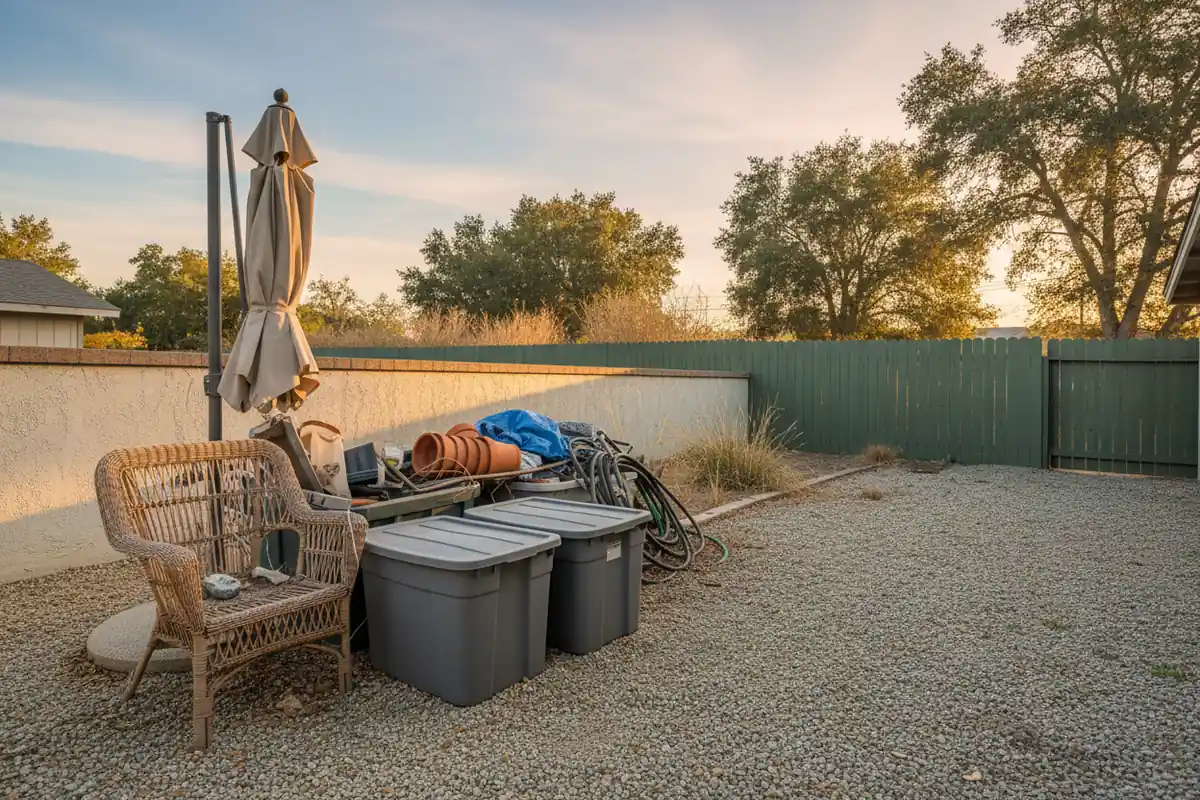
Junk hauling in San Diego County is a truck-and-crew service that loads a pile or a few bulky items and drives them away. It fits when the items are already gathered or easy to point to, and the job is lifting and removal rather than sorting a whole house. The price comes from a written quote for that load.
On this page
Key Takeaways
A few terms come up throughout this page. Junk removal is the broader name for clearing unwanted things from a property; hauling is one form of it. A bulky item is anything too large or heavy for a regular trash cart, such as a couch, a mattress or an appliance.
| Route | Who does the lifting | Fits when |
|---|---|---|
| Junk hauling | A hauling crew | A defined pile or a few bulky items |
| Curbside bulky-item pickup | The owner sets items at the curb | A city or county program accepts the item |
| Self-haul | The owner, with their own vehicle | The owner can load and drive the items |
| Cleanout | A crew that sorts and removes | A whole room, garage or home needs clearing |
Each route has a trade-off. Self-haul and curbside pickup ask more of the owner's time and back, while hauling and cleanouts shift that work to a crew at a quoted price.
- The quote depends on the kind and amount of items, their weight, access, stairs, the distance to the curb, how items are disposed of and the timing.
- Each quote is tied to one load at one property, so it is not a general rate.
What This Service Covers
Most hauling jobs involve household and property items that can go through ordinary disposal channels. Categories that come up often include:
- Furniture: couches, tables, dressers, chairs and bed frames.
- Appliances: refrigerators, washers, dryers, stoves and water heaters.
- Electronics: televisions, computers and similar devices, which may be handled separately.
- Construction and demolition debris: the waste from building, remodeling or tearing out, such as drywall, lumber, tile and concrete.
- Green waste: yard material such as branches, clippings, leaves and stumps.
- Garage contents: boxes, shelving, old equipment and stored items.
- General household junk: the mixed odds and ends that collect in closets, sheds and side yards.
Some items need special handling. Household hazardous waste means everyday products that can harm people or the environment if thrown away carelessly, such as paint, solvents, pesticides, pool chemicals and certain batteries. Electronic waste means discarded devices with screens, circuit boards or batteries. Mattresses, tires and paint also tend to move through their own channels rather than the general load. A half-empty can of exterior paint sitting next to an old dresser, for example, usually travels a different route than the dresser does. For a mattress in particular, the mattress removal options in San Diego County cover that item on its own.
Materials with regulated disposal requirements may fall outside a standard hauling job. What a hauler accepts for a given load is settled at quoting, so it helps to name anything unusual up front.
How Pickup Works, Step by Step
A hauling job generally follows the same sequence, whether the property is a condo in National City or a ranch-style home in Ramona.
- Quote request. The request describes the items and the property.
- Description of items and access. This covers the kind and rough amount of items, where they sit, and how a crew reaches them.
- Written quote. The quote states the price for that load and what it includes.
- Scheduling. The owner and the hauler agree on a date.
- Loading and removal. The crew carries the agreed items to the truck and drives them away.
Access shapes how a job is scoped. Parking for a truck, the number of stairs, a gated entry, homeowners association rules and the distance from the items to the curb all change the work involved. A third-floor apartment in La Mesa with no loading zone is a different job from a driveway pile in Santee, even with the same items. A sofa that has to come down a narrow stairwell with a tight landing takes more time and hands than one sitting in an open garage.
Timing and Scheduling
The pickup date is agreed between the owner and the hauler, and timing is one of the factors that can shape the quote. A request for a specific or near-term date and a request with a flexible window are different starting points, so how firm the date is belongs in the initial description alongside the items and access.
What the Written Quote Pins Down
The written quote is where the details of the job get settled in one place. Drawing on the points above, it typically records:
- The price for that load at that property.
- Which items are included, and whether anything is excluded.
- Items needing special handling, such as hazardous materials, electronics, mattresses or tires, and how they are treated.
- The access conditions the price assumes, such as stairs, parking and the carry to the curb.
- The disposal approach the hauler plans for the load.
- The agreed date, and who will be present when the crew arrives.
Questions About the Hauler Itself
The quote stage is also a natural point to ask a hauler about its business, including how it operates, what licensing or insurance it holds, and how it handles the load once it leaves. This page does not set out California's licensing or insurance requirements for haulers, so the answers a hauler gives are details for the owner to weigh alongside the price.
What Affects the Price
Several factors shape a hauling quote, and each one comes back to the work or the disposal:
- Kind of items: a load of cardboard differs from a load of concrete.
- Amount: more items generally mean more space in the truck and more loading.
- Weight: heavier loads take more effort to carry and can cost more to dispose of.
- Access: stairs, long carries to the curb, tight hallways and limited parking add labor.
- Disposal method: items going to a landfill, a recycler or a donation drop-off may follow different paths, and items needing special disposal can add steps.
- Timing: the date requested and how flexible it is can matter.
Because a quote reflects one property's conditions, a figure for a house in Oceanside does not carry over to a house in Poway. When comparing quotes, it helps to check that each one describes the same items, the same access conditions and the same disposal assumptions, so the numbers line up. The San Diego County junk removal overview covers these price factors across removal jobs more broadly.
What Happens to the Items
After loading, items usually go to one of a few kinds of places. A transfer station is a facility where collected waste is dropped off, sorted and consolidated before moving on to a landfill or a recycler. Other destinations include a recycling facility for materials such as metal or cardboard, a donation drop-off for usable furniture and goods, and a landfill for what remains.
Where a specific item ends up depends on its condition, its material, the disposal rules that apply to it, and what the receiving facility accepts. A worn sofa with torn cushions and a nearly new one may take different paths. Donation and recycling depend on those conditions rather than on a promise, and the quote is a natural moment to ask how a hauler plans to dispose of the load.
Household hazardous waste and electronic waste follow separate regulated channels. The city or county program that handles those materials confirms where they go and what it accepts.
How to Get Ready
A little preparation makes the quote more accurate and the pickup smoother for the home or space being cleared.
- Separate household hazardous waste. Paint, chemicals and batteries stay apart from the general pile.
- Set electronic waste aside. Televisions, computers and devices grouped together are easier to discuss separately.
- Flag items that may need special handling. Mattresses, tires and anything unusually heavy are worth noting.
- Set aside papers and keepsakes. Documents, photos and anything of personal value come out of the pile.
- Make a keep list. Marking what stays helps keep anything from being loaded by mistake.
- Check parking. Where a truck could stop, and whether a permit or loading zone is involved.
- Count the stairs. The number of flights and any narrow turns.
- Measure the carry. The rough distance from the items to the curb or driveway.
- Read any association or building rules. Some communities set hours or routes for removals.
- Gather records for titled items. A vehicle or trailer may need its paperwork located; the DMV confirms transfer requirements.
What can wait: sorting every box to perfection. A clear separation of special items and an honest description of access usually matter more than a tidy garage.
Service Area
This site's service area is San Diego County, California. That includes the City of San Diego and cities and communities across the county, such as Chula Vista, El Cajon, Escondido, Oceanside, Carlsbad, Vista, San Marcos, Santee, La Mesa, National City, Poway, Lemon Grove, Encinitas, Solana Beach, Del Mar, Coronado and Imperial Beach, along with unincorporated communities such as Spring Valley, Lakeside and Ramona. For the City of San Diego itself, the junk removal guide for San Diego covers city-specific points.
Availability is confirmed property by property. A home in Carlsbad, a rental in El Cajon and a shop in Vista are each checked on their own details.
Walking the space once, listing the items that may need special handling, and noting parking, stairs and the distance to the curb puts those details in hand before a quote is requested.
Ready for a quote?
Add the items, the address and your timing.
Get my junk removal quoteFrequently asked questions
What items will junk hauling services not take?
Items with regulated disposal requirements often fall outside standard hauling. These include household hazardous waste such as paint and chemicals, some electronic waste, tires and similar materials. What a hauler accepts for a specific load is confirmed at the time of quoting.
How do I dispose of large items in San Diego County?
There are four main routes: truck-and-crew hauling, a city or county curbside bulky-item program, self-hauling to a transfer station, and a donation drop-off for usable items. Each trades effort against cost. The fit depends on the item, the amount, access and timing.
What is the minimum cost for junk removal?
No single figure applies. Cost comes from a written quote for one job, based on the kind and amount of items, their weight, access and how they are disposed of. A quote request with those details is how a figure for that job is reached.
How do junk haulers make money?
Haulers charge for two things: the labor of loading and removing items, and the cost of disposing of them at a transfer station, recycler or landfill. A quote reflects both the work and the disposal.
What is the difference between junk hauling and a cleanout?
The practical test is whether the items still need sorting. If the pile is already gathered and the decisions about what goes are made, the job is hauling. If a garage, home or rental unit still holds a mix of keep and discard items, the sorting itself is part of the work, which is what makes it a cleanout.
Can junk haulers take appliances and electronics?
The two are treated differently at quoting. A washer or refrigerator usually rides with the rest of the load, while a television or computer is often discussed as its own line, because electronic waste moves through a separate channel. Grouping devices apart before the quote makes that conversation simpler.
What should I do with household hazardous waste before a junk hauling pickup?
Keeping it out of the pile from the start avoids having to pull it back out on pickup day. Because paint, solvents, pesticides and certain batteries are not part of standard hauling, the hauler's quote and the city or county program's drop-off options are two separate conversations, and the program confirms what it accepts.
Does junk hauling cover construction debris?
Often, yes, though it may be quoted separately. Construction and demolition debris such as drywall, lumber, tile and concrete is heavy and can carry its own disposal requirements. The quote for the specific load confirms what is included.
How do I get ready for a junk hauling pickup?
Preparation usually starts with separating hazardous materials and electronics from the general pile, then checking parking, stairs and the distance to the curb, along with any building or association rules. The How to Get Ready checklist above lists each step.
Does this site's service area include my city?
The service area is San Diego County, California, including cities such as San Diego, Chula Vista, Oceanside, Escondido and El Cajon. Availability for a particular property is confirmed for that property.