The pile might be left over from a tree trimming job, a storm, or a full backyard clearout at a home, a rental or a relative's property. Whatever the cause, the first question is what the pile contains. Plain plant material and mixed debris tend to travel different routes, so sorting the two is usually the most useful early step. The sections below cover what counts as yard waste, the routes available, what to set apart, what shapes a quote, and how to prepare.
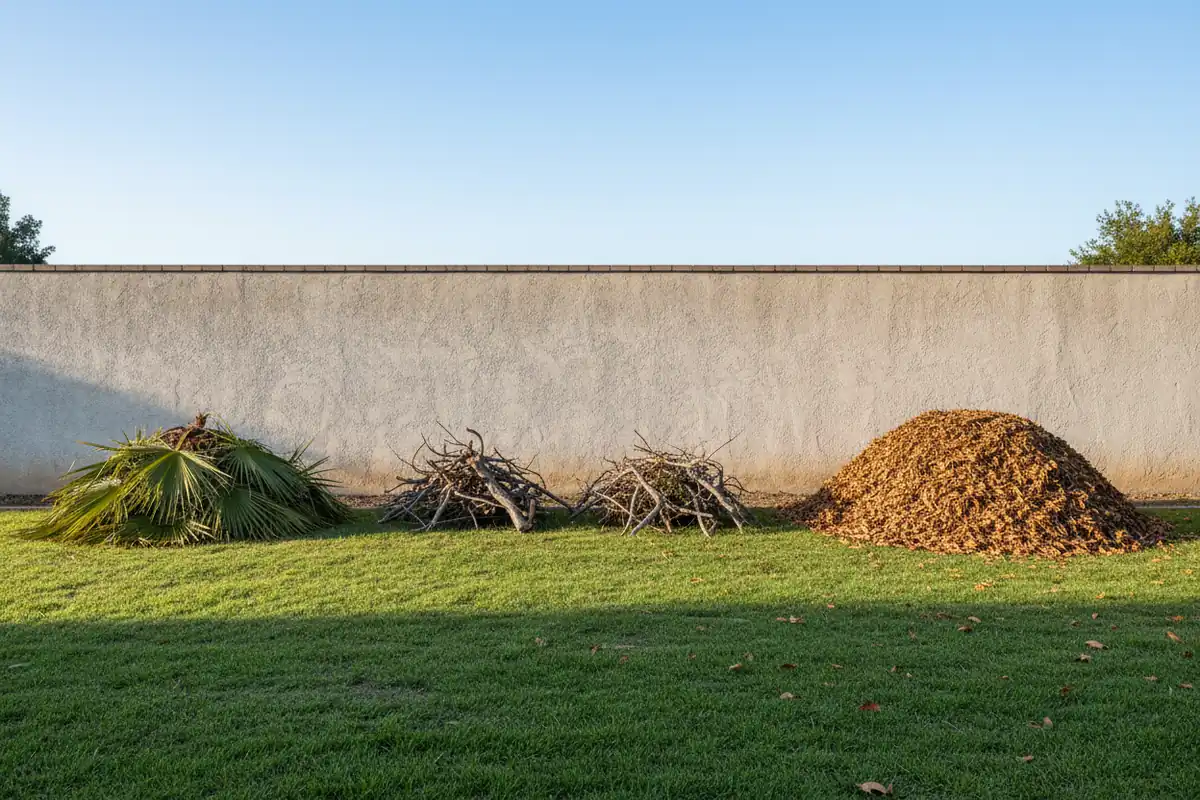
A pile of branches, palm fronds, clippings or old fencing in a San Diego County yard usually leaves the property in one of three ways. It can go out through the city's curbside green waste program, it can be driven to a facility that accepts it, or a hauler can load it and take it away. How much there is, what it is made of and how easy it is to reach decide which route fits.
On this page
What Yard Waste Removal Covers
Yard waste, also called green waste, is plant material from a yard or garden: grass clippings, leaves, branches, shrubs, palm fronds, tree trimmings and garden cuttings. In yard waste removal, a hauler loads that material and takes it off the property. "Hauling" is simply the general term for that loading and transport.
Some backyard material looks similar but belongs to other categories:
- Construction and demolition debris. Material from building or tearing down, such as old fencing, posts treated with preservatives, concrete and broken pavers.
- Soil, rocks and dirt. Heavy material that is not plant matter.
- Household junk. Patio furniture, old planters, hoses and broken tools, which fall under general junk removal in San Diego County.
A mixed load combines yard waste with any of these. Haulers usually treat it differently from a load of pure green waste, because the facilities that receive each kind of material set their own rules on what they accept.
The Three Routes for Yard Waste
Curbside green waste pickup
Curbside collection is usually the first route to check. Cities across San Diego County run their own residential collection programs, including the City of San Diego, Chula Vista, El Cajon, Escondido and Oceanside. Each program states what goes in its green waste cart, any size limits, and its collection schedule.
A cart works well for routine clippings and leaves, but some jobs go beyond what it can hold:
- a large tree trimming job
- storm cleanup
- a full yard clearout
- oversized branches or trunk sections
- palm fronds in bulk
Self-haul to a facility
Self-haul means loading the material and driving it to a transfer station or a composting site. A transfer station is a facility where waste is dropped off and sorted for its next destination. With self-haul, the household supplies the vehicle and the labor, and the facility decides what it accepts. Sorting before the trip matters for the same reason it matters with a hauler: a facility that takes green waste may not take mixed debris.
A hauling service
A hauling service is the third route. Households often turn to it when the volume, the access or the time involved makes self-haul impractical. The how junk removal works guide walks through the steps of a typical pickup.
Items That Need Special Handling
Pressure-treated lumber and other chemically treated wood contain preservatives that protect the wood from rot and insects. Those chemicals are what separate it from plain plant material, and the local city or county program identifies where treated wood can go.
Several other materials also belong outside the green waste pile:
- Painted or stained fencing. It counts as construction debris, not green waste.
- Soil and dirt. These travel separately from green waste.
- Invasive plants. Some may need bagging or other handling that keeps them from spreading. Local program guidance covers how a particular species is handled.
- Household hazardous waste. Products that can harm people or the environment if thrown out with regular waste, such as pesticides, herbicides, fertilizers, pool chemicals and wood preservatives. These do not belong in any yard waste load. The San Diego County household hazardous waste program lists where they go.
With these pulled out, the green waste pile stays simple and the rest of the job is easier to describe.
What Affects the Price
A written quote sets the price for a specific property and a specific load, so this page gives no price range. These factors shape the quote:
| Factor | What it means for the quote |
|---|---|
| Volume and weight | How much material there is and how heavy it is |
| Type of material | Pure green waste compared with a load mixed with fencing, soil or other debris |
| Access | Gate width, the distance from the pile to the truck, and any stairs or slopes |
| Where it goes | Whether a composting facility can accept the load or it goes to general disposal |
| Load size | How much truck space the material needs and whether more than one trip is involved |
In practice, soil and rocks add weight quickly, while bundled branches take up less space than loose ones. The junk removal pricing guide explains these factors in more detail. The clearest picture comes from the pile as it actually stands, including where it sits and what is mixed into it.
How to Get Ready
Sorting takes the most effort, and it also does the most to make the pickup go smoothly. Typical preparation includes:
- Separating the green waste. Branches, clippings and fronds stay apart from treated wood, fencing, soil and other debris.
- Bundling branches. Long limbs get cut or stacked to a manageable size where access allows.
- Clearing a path. A route opens from the pile to the street or the loading area.
- Setting aside special items. Treated lumber and any household hazardous waste move away from the green waste.
- Noting the access. A locked gate, low overhang, narrow driveway or slope gets written down.
- Keeping what matters. Planters, garden ornaments, tools and anything someone else may want come out of the pile.
Gate codes, a move-out date and homeowners association rules depend on the property rather than the area, so they are worth confirming ahead of time.
Common Mistakes
A handful of problems come up again and again with yard waste, and each is easy to avoid once it is known.
- Treated or painted wood in the pile. It can disqualify the load from composting.
- Expecting the cart to handle bulk. Curbside programs have their own size and volume limits.
- Soil or rocks mixed in. They add weight, and green waste facilities may not accept them.
- Hazardous containers left behind. Empty pesticide jugs or preservative cans sometimes end up buried in a pile.
- Unchecked curb rules. Cities and homeowners associations may have rules about placing debris at the curb.
A quote request goes more smoothly with the city's curbside green waste rules for the property, the access details, and a note of any special-handling items in the pile.
Ready for a quote?
Add the items, the address and your timing.
Get my junk removal quoteFrequently asked questions
Will waste management pick up yard waste?
Many cities in San Diego County collect green waste at the curb as part of residential service. Each city's program states what it accepts, its size limits and its collection day. Bulk volumes and oversized branches can fall outside what a cart covers.
How do I dispose of large amounts of yard waste in San Diego?
Large amounts usually go one of three ways: a curbside cart within the city's limits, self-haul to a facility that accepts green waste, or a hauling service. Volume, material type and access decide which fits.
How is old pressure-treated lumber disposed of?
Pressure-treated lumber contains preservative chemicals, so it stays separate from green waste. Local city or county guidance identifies which facility accepts it.
What counts as yard waste or green waste in San Diego County?
Grass clippings, leaves, branches, shrubs, palm fronds, tree trimmings and garden cuttings count as yard waste. Soil, treated wood, painted fencing and construction debris travel separately.
Can I put palm fronds in my green waste cart?
Palm fronds are plant material, but each city's program sets its own size and volume limits for the cart. Bulk quantities may go beyond what a cart covers, and the city's program spells out its rules.
What yard waste cannot go in the green waste bin?
Soil, rocks, treated or painted wood, construction debris and household hazardous waste do not belong in a green waste bin. Mixing them in can disqualify a load from composting.
Do I need a permit to put yard waste at the curb in San Diego?
Rules on placing debris at the curb depend on the city and, for properties in a homeowners association, on the association's rules. The city's public works or sanitation office and the association confirm what applies.