A pile of metal in a side yard, garage or job site raises practical questions. Will a hauler take it, which pieces need different handling, and how is the work priced? Those answers depend on what the metal is, how much there is and how it is reached. This guide covers each in turn. What happens to the property afterward is a separate decision. Clearing the metal out does not require one.
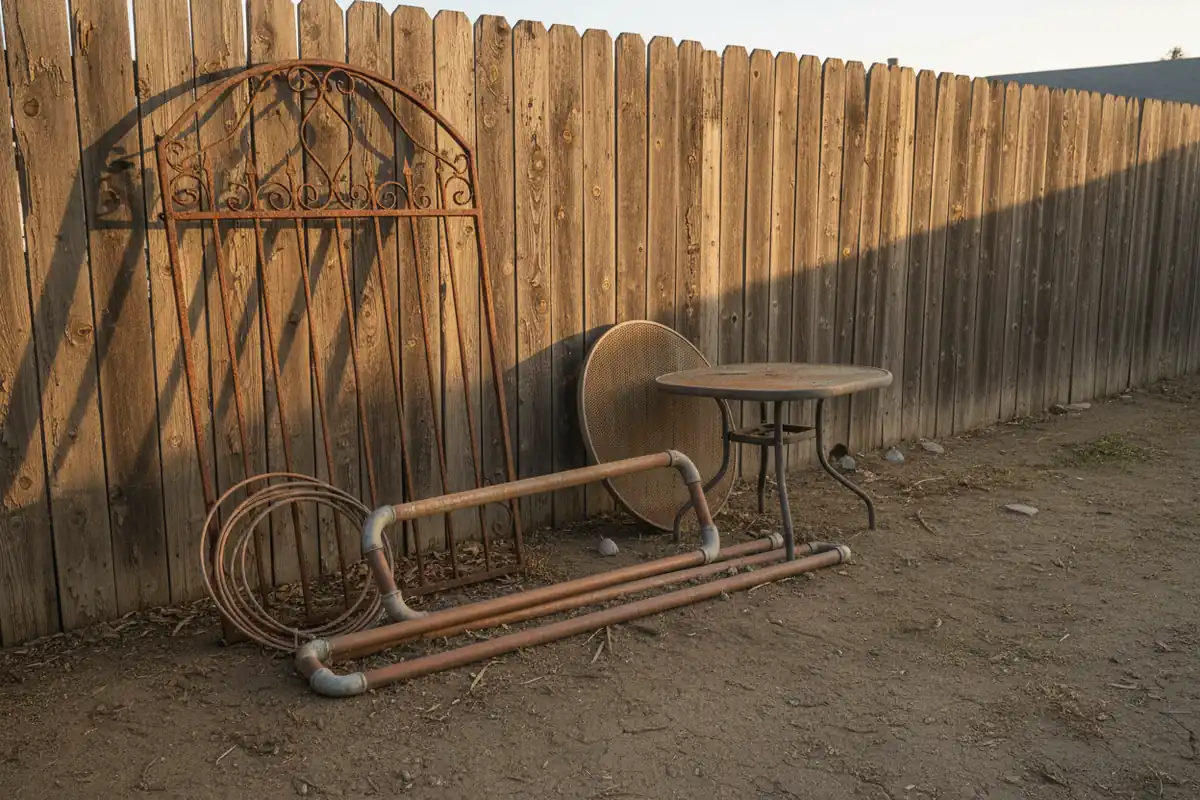
Scrap metal on a San Diego County property, such as old pipe, a torn-out fence, metal furniture or a worn-out washer, can usually be collected by a hauling company and routed to a metal recycler. A few metal items, including appliances that hold refrigerant, electronics and anything holding a hazardous product, go through separate channels.
On this page
What Scrap Metal Removal Covers
Scrap metal removal is the collection and hauling of metal items from a property, both ferrous and non-ferrous. Ferrous metal contains iron, as steel and cast iron do. Non-ferrous metal contains little or no iron. Copper, brass and aluminum are non-ferrous.
A scrap metal pickup in San Diego County typically includes items like these:
- Metal furniture, such as bed frames, filing cabinets, shelving and patio sets
- Pipe, including steel, copper and brass fittings
- Chain-link or wrought-iron fencing and gates
- Rebar and sheet metal left from a project
- Appliances with metal bodies, such as washers, dryers and stoves
- HVAC equipment and ductwork
- Auto parts
- Aluminum framing, gutters and screens
Scrap metal removal differs from general junk removal in a few ways. Metal loads are often heavier. They may call for different handling. The metal is generally headed for recycling rather than burial. Many loads are mixed, with metal alongside wood, plastic or fabric. In that case the metal portion is typically separated from the rest before it is routed onward.
When Scrap Metal Removal Makes Sense
Several situations tend to produce enough metal to justify a dedicated pickup:
- An estate or property cleanout where metal has collected over the years
- Leftover pipe, ductwork or rebar after a renovation
- A fence or gate replacement
- Old appliances replaced with new ones
- Clearing a shop, garage or business space
Each situation has more than one way to clear the metal. A household in the City of San Diego can check with the City whether a bulky-item pickup is offered. A bulky item is anything too large for a regular bin. Curbside programs generally limit how many items and which kinds they take. Unincorporated San Diego County and each incorporated city in San Diego County set their own bulky-item rules. A resident of those areas can check with the local waste hauler or city.
Self-hauling is another route. An owner can take metal to a recycler or a transfer station, which is a facility where waste is unloaded and sorted before it moves on. This route needs a vehicle that can carry the load. It also means checking what that destination accepts.
A hauling company collects the metal from the property, sorts it and routes it onward. This route tends to fit when the amount, the heft of the items or the access makes self-hauling impractical. The steps of a pickup are laid out under how junk hauling works.
Items That Need Special Handling
Some metal items do not go out as ordinary scrap, even though they look like it.
| Item | Why it is different | Who confirms how it is handled |
|---|---|---|
| Refrigerators, freezers, air conditioners, dehumidifiers | They contain refrigerant, which is handled under California rules before the unit is recycled or disposed of | The city or county program |
| Computers, monitors, TVs and similar electronics | They are electronic waste, which follows its own California rules | The city or county program |
| Propane tanks, paint cans, batteries | They are household hazardous waste | County of San Diego household hazardous waste program |
| Tires | They are not scrap metal and follow their own disposal channel | The local city or county program, or a tire retailer |
| Vehicles and major vehicle parts | Title or other paperwork may apply | The recycler that accepts it |
Electronic waste, also called e-waste, means discarded devices with screens or circuit boards. Household hazardous waste means products from a home that can harm people or the environment if handled as ordinary trash, such as fuels, solvents and batteries.
For any item in the table, the program or business named in that row confirms how its rules apply.
What Affects the Price
A written quote sets out the price for a specific load and property. These factors shape it:
- Amount and heft. A heavier or bulkier load takes more labor and more truck space.
- Access. Stairs, narrow gates, a long carry to the curb and tight parking all add to the work.
- Type of metal. Ferrous and non-ferrous metal are routed differently and carry different scrap values. A hauler's pricing may reflect what the metal is worth as a commodity.
- Mixed loads. Metal combined with wood, plastic or fabric takes more sorting. It may be priced differently from a clean, metal-only load.
- Where it goes. A load headed to a recycler can cost a different amount than one headed to a transfer station or landfill. Scrap value can offset part of the hauling cost, but the offset depends on commodity prices at the time.
How these factors combine is explained in junk removal pricing. No figure applies to a load until it has been described or seen.
How to Get Ready
A little sorting makes the job clearer for everyone involved with the property:
- Separate metal from non-metal. A cleaner load is easier to quote and route.
- Set aside special-handling items. Refrigerant appliances, electronics and hazardous products go through other channels.
- Clear a path. Open gates, move vehicles and note any stairs or tight turns.
- Describe the load. A rough count of appliances, a length of fencing or a number of boxes of pipe gives a clearer picture.
- Check association or building rules. Some associations limit when and how large items move through common areas.
- Flag possible refrigerant. If an appliance's contents are uncertain, note that in the request so the handling can be confirmed.
- Keep papers and keepsakes apart. Look through metal cabinets, toolboxes and drawers for documents, photos or anything a relative may want.
Nothing here has to happen all at once. Items someone has not decided about can stay out of the load until they do. The steps of junk removal give a broader view of sorting a space.
Mistakes to Avoid
A few missteps complicate a scrap metal pickup in San Diego County.
- Putting refrigerant appliances out as plain scrap. Leaving a refrigerator at the curb with bulk metal does not take care of its refrigerant. The city or county program confirms how those units are handled.
- Mixing e-waste into the metal. Electronic devices follow their own channel. They do not go with general scrap.
- Assuming every metal item goes curbside. Bulky-item programs have quantity and item limits. A load beyond them needs a separate arrangement.
- Leaving hazardous products inside metal items. Propane tanks, paint cans and batteries in a load can lead to the load being refused.
- Skipping vehicle paperwork. Title or other requirements for a vehicle or major parts are confirmed with the recycler that accepts it.
- Leaving heavy items until a move-out or estate deadline. Access and scheduling problems are easier to sort out with lead time.
A practical next step is to write down the metal items, where each sits on the property and any access limits. Then check what the local bulky-item program accepts. For a City of San Diego address, what the city does and does not pick up is outlined in junk removal in San Diego. Elsewhere in San Diego County, the local waste hauler or city confirms its rules.
Ready for a quote?
Add the items, the address and your timing.
Get my junk removal quoteFrequently asked questions
What types of scrap metal can be removed from a San Diego property?
Both ferrous and non-ferrous metal can be removed. Ferrous items include steel, iron pipe, rebar, fencing and metal furniture. Non-ferrous items include copper pipe, brass fittings and aluminum framing. Appliances with metal bodies are included too. Units with refrigerant or electronics need the special handling described above.
Is scrap metal removal free in San Diego?
It depends on the load. The amount, the heft, the access and whether the metal's scrap value offsets the hauling all play a part. A written quote reflects those specifics for the load and the property. No outcome is assured.
Can I put scrap metal out for bulky-item pickup in San Diego?
The City of San Diego confirms whether it offers any bulky-item pickup. Residents of unincorporated San Diego County or other cities check with their local waste hauler. Refrigerant appliances and e-waste follow separate channels whichever program applies.
What happens to scrap metal after it is removed?
Scrap metal is generally routed toward recyclers after mixed loads are sorted. Refrigerant appliances are handled separately first. Where a given item ends up depends on its condition and on what the receiving facilities accept. No particular result is promised.
Do I need to sort the metal before a pickup?
Sorting is not required, but it helps. A cleaner load is easier to quote and route. Setting aside appliances, electronics and hazardous products ahead of the pickup avoids delays on the day.
Are appliances considered scrap metal in San Diego?
Washers, dryers and stoves with metal bodies are generally handled with scrap metal. Refrigerators, air conditioners and other units containing refrigerant follow separate rules that the city or county program confirms. Electronics with screens or circuit boards follow e-waste rules.
What scrap metal items are not accepted by haulers?
Some items do not go as ordinary scrap. These include appliances with unrecovered refrigerant, covered electronic devices, items holding household hazardous waste such as propane tanks, paint cans and batteries, and tires. Each has its own channel in San Diego County.