Clearing an attic is different from clearing a room, and it is often a bigger task than it first looks. Everything comes down through a hatch or a ladder, the space may be hot and cramped, and a box that has sat for years can hold anything from tax records to a can of old pesticide. What leaves the attic, and how, depends on what is up there, how it is reached and what each material needs at the other end.
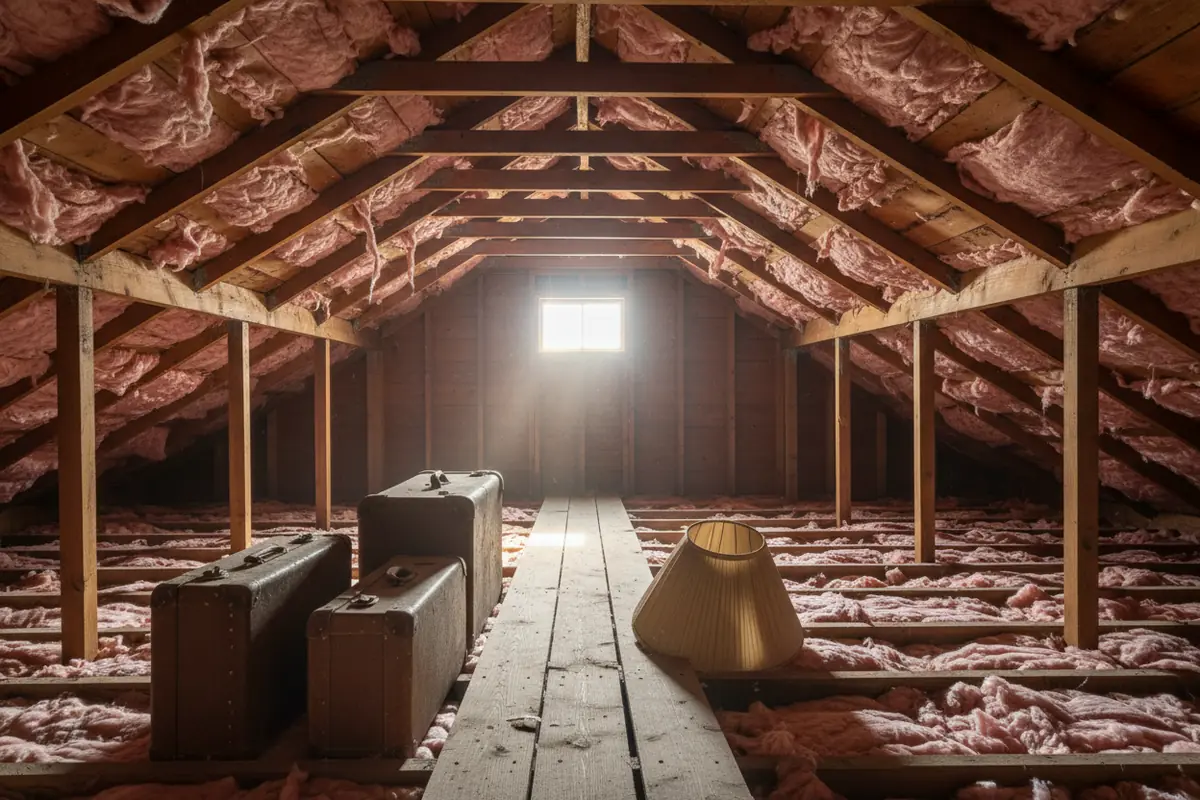
An attic cleanout in San Diego County removes stored boxes, old furniture, decorations and loose debris from the attic and hauls them away. Ordinary stored items usually go out with a standard junk removal job. Old insulation, rodent-soiled material, chemicals and electronics may need separate handling. A written quote sets out the scope and price for a specific attic.
On this page
What an Attic Cleanout Covers
An attic cleanout is the removal of stored items, debris and materials that have built up in an attic space. Junk removal, more broadly, means hauling unwanted items away from a property, and the steps are much the same as in how junk removal works; the attic adds access and material questions.
Typical attic contents include:
- Cardboard boxes of papers, books and household goods.
- Old furniture, lamps and small pieces stored out of the way.
- Holiday decorations and artificial trees.
- Clothing, linens and bagged textiles.
- Loose insulation debris and old packing material.
- Items damaged by rodents, moisture or age.
Two kinds of work sit under the same name. Item removal covers boxes and furniture that can be carried out. Material removal covers insulation and debris that is part of, or stuck to, the attic itself, and it may involve different handling and a different kind of contractor.
Access shapes all of it. A narrow hatch limits what fits through, pull-down stairs and fixed ladders change how loads are carried, and an attic without flooring means working from joists. Heat and poor lighting in the space are conditions to note for any San Diego County attic.
When an Attic Cleanout Makes Sense
Several practical situations lead to an attic cleanout:
- Getting a home ready for a new tenant or a listing.
- Clearing a relative's belongings as part of an estate.
- Dealing with signs of rodents or other pests.
- Clearing the space after water or fire damage.
- Preparing for insulation replacement.
- Reclaiming storage space that has filled up.
An attic is often one part of a larger job, such as an estate cleanout of a whole home. What happens to the house is a separate decision, and clearing an attic does not require selling the property.
Timing matters when other work is planned. Stored items usually come out first so that pest work, damage repair or insulation work has a clear space. A contractor doing that other work can say what condition the attic needs to be in, and the cleanout can be planned around it.
Items That Need Special Handling
Some things found in attics are not ordinary junk, and they are worth separating from the boxes and furniture.
Old insulation. Insulation of unknown age or type can be a question mark. Whether it contains anything hazardous is not something a look can settle; testing by a qualified professional answers it. Removal of suspect insulation is work for a contractor qualified in that material, not a general hauler, and the state contractor licensing authority confirms which classification covers it.
Rodent-contaminated material. Soiled insulation, droppings and nesting debris are handled differently from clean stored items. How they are bagged and where they go is a question for the hauler or a pest or remediation contractor, set out in the quote.
Household hazardous waste. This term means leftover household products that are toxic, flammable or corrosive, such as paints, solvents, pesticides and some cleaners. These do not belong in a regular trash load. The county or city household hazardous waste program for the property's address confirms what it accepts and how drop-off works.
Electronic waste. Electronic waste means discarded devices with circuit boards or screens, such as old televisions, monitors and computers. California treats many of these separately from regular trash, and the local program or a collection site confirms how they are taken.
Flagging any of these when requesting a quote lets the right handling be arranged for each one.
What Affects the Price
The price of an attic cleanout comes from the specific attic, not a general rate. The main factors:
| Factor | Why it matters |
|---|---|
| Access | Hatch size, pull-down stairs or a fixed ladder, and the distance from the attic to the truck all change the labor involved. |
| Volume and weight | More items, and heavier ones, take more labor and space. |
| Material type | Clean stored items, contaminated material and regulated material are each handled differently. |
| Insulation | Insulation removal is typically scoped and priced separately from item removal. |
| Disposal route | Where each material goes, whether a landfill, a recycler or a hazardous waste program, affects cost. |
| Building and parking | Interior stairs, parking distance, and whether the home is a single-family house, a condo or a multi-unit building. |
Because these factors vary from attic to attic, no general figure is given here. The broader factors behind junk removal pricing apply to attics as well.
How to Get Ready
A clear scope starts with sorting and a clear path to the hatch.
- Sort into keep, donate and remove. Items sorted before the pickup make the scope plain.
- Set aside papers and keepsakes. Old boxes can hold documents, photos or things someone else in the family may want.
- Separate anything that may need special handling. Insulation questions, chemicals and electronics are easier to flag when they are grouped.
- Clear the route to the access point. A hallway or closet free of clutter under the hatch or ladder lets the space be assessed and worked safely.
- Note access limits. Low clearance, open joists and limited lighting are worth describing in the request.
- Note any rodent activity or water damage. Either one changes how materials are handled.
- Find any association or building rules. An HOA or building manager may have rules on debris removal, parking or elevator use.
Similar sorting applies to garage cleanouts and to bulky pieces covered under furniture removal.
It also helps to gather what is already known about the attic: the home's age, any records of past insulation work, and any history of rodents or leaks. Those are the details a quote request asks about first.
Mistakes to Avoid
A few missteps tend to complicate an attic cleanout:
- Treating everything as one load. Chemicals, electronics and suspect insulation may not go in a standard bin or trash load.
- Disturbing insulation of unknown type. Testing comes before pulling or bagging old insulation whose composition is uncertain.
- Booking insulation work too early. Insulation replacement goes more smoothly after stored items are out.
- Leaving out rodent or water history. Both change the scope, and leaving them out can mean a second visit or a revised quote.
- Putting household hazardous waste in the trash. The local household hazardous waste program is the channel for these products.
Ready for a quote?
Add the items, the address and your timing.
Get my junk removal quoteFrequently asked questions
How do I clean out my attic?
Sort items into keep, donate and remove, and set papers and keepsakes aside. Separate anything that may need special handling, such as old insulation, rodent-soiled debris, chemicals or electronics, and flag it in the quote request. Hatch size, ladders and clearance shape how the work proceeds.
How much does it cost to clean out an attic in San Diego?
Cost depends on the volume and weight of items, access, the types of material, the disposal route and whether insulation removal is included. A quote for the specific property sets out the price. The table under What Affects the Price lists each factor.
How often should an attic be cleaned?
There is no fixed schedule. A cleanout usually follows a trigger such as pest activity, water or fire damage, insulation work, clearing an estate, preparing a rental or listing, or reclaiming storage. The property's history and condition decide it, not a calendar.
Does homeowners insurance cover attic restoration?
That depends on the policy and the cause of the damage. Rodents, water intrusion and fire may be treated differently from one policy to the next. The insurer and the policy terms confirm what is covered.
Can old attic insulation just be hauled away?
It depends on what the insulation is. Its composition is settled by testing, not by looking. Suspect insulation is work for a contractor qualified in that material rather than a general hauler. The home's age and insulation type belong in the quote request.
What happens to household hazardous waste found in an attic?
Paints, solvents, pesticides and similar products stay out of a regular trash load. The county or city household hazardous waste program for the property's address confirms what it accepts and its current drop-off options.
Is attic cleanout the same as insulation removal?
No. An attic cleanout removes stored items and debris. Insulation removal is a separate scope with different handling, and it is typically quoted separately. The two are often planned in sequence, with the cleanout first.