You may be replacing flooring in your own home, turning over a rental between tenants, or clearing a relative's house room by room. In each case the same questions come up: how much carpet and padding there is, how it gets from the room to a truck, and whether any part of the job needs separate handling. The sections below take those questions in order. What happens to the property afterward is a separate decision, and clearing a space does not require selling it.
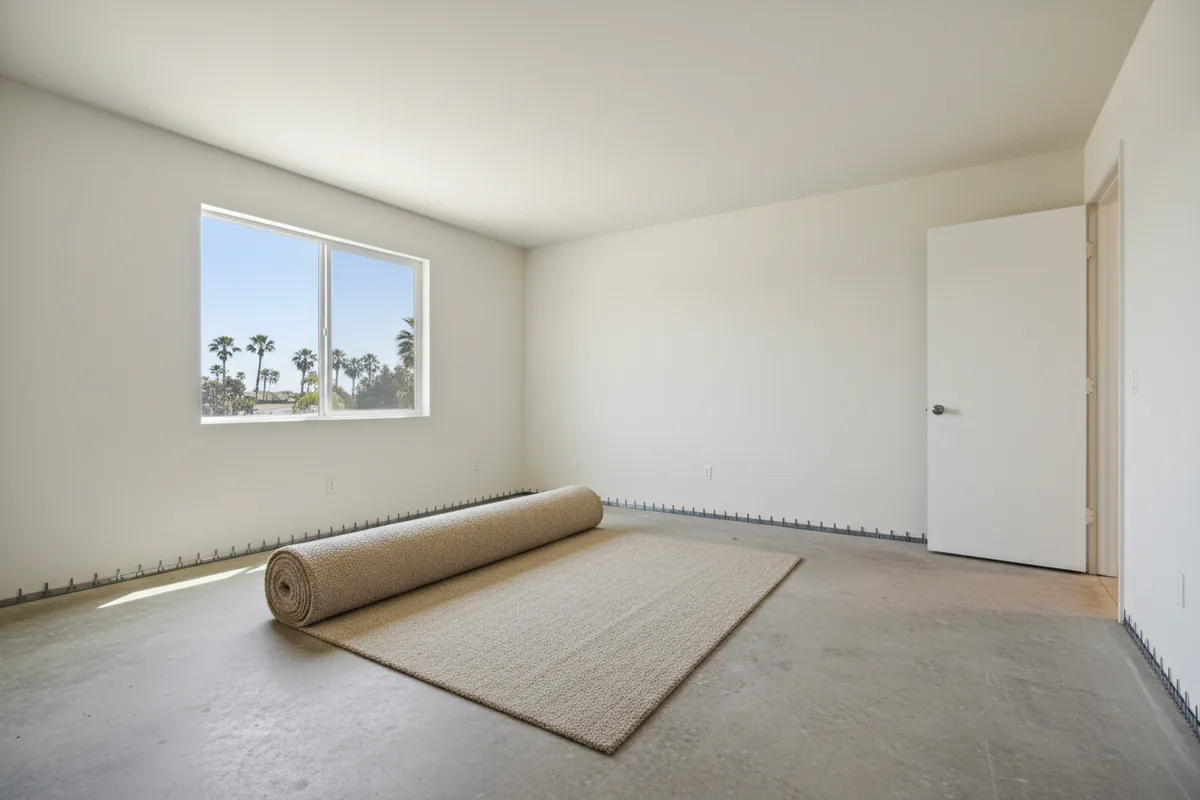
Old carpet, its padding and its tack strips are usually pulled up and hauled away together as one job. Where the material goes after that depends on what the receiving facility or program accepts. In San Diego County, your city's own rules decide whether curbside pickup, a drop-off or a hauler fits.
On this page
What Carpet Removal Covers
Carpet removal is the physical pulling up and hauling away of old carpet and padding from a property. It is a form of junk removal, which means clearing unwanted items or materials and taking them off the property. Carpet cleaning treats carpet that stays in place, and carpet installation lays new flooring. Removal is only about getting the old material out.
A carpet job typically involves three materials:
- Wall-to-wall carpet. The face fabric, usually cut into strips and rolled.
- Padding or underlayment. The cushion layer underneath, often a separate piece.
- Tack strips. Thin wooden strips with sharp metal points along the room's edges that hold the carpet in place.
Carpet is a bulky item, meaning a large, heavy piece that does not fit in a regular trash can. Rolled sections are awkward to carry through hallways, around stair landings and through doorways, and that awkwardness is a large part of why carpet is handled as its own job. The steps of a junk removal pickup apply here the same way they do for furniture or appliances.
When Hauling Old Carpet Makes Sense
Flooring replacement is the plainest case. The old carpet comes up before the new floor goes down, and the rolls and padding have to leave the property somewhere.
Other situations follow the same pattern:
- Move-out or rental turnover. A landlord or property manager may need worn carpet cleared between tenants.
- Estate or whole-home cleanout. A cleanout is the clearing of a whole space, such as a garage, a room or a house. Carpet may be one part of a larger cleanout alongside furniture and household items.
- Carpet that is hard to move. Rolls are heavy, and a car or small truck may not hold them.
Doing it yourself and hiring a hauler each carry trade-offs. Doing it yourself means your own labor, your own transport and a trip to wherever the material is accepted. Hiring someone means a quote for the work and a set time. Which costs less or goes faster depends on how much carpet you have, how easy the rooms are to reach and what vehicle is available to you. The same reasoning applies to junk hauling in general.
Items That Need Special Handling
Tack strips
Tack strips need the most care in the room itself. Their metal points cut hands and puncture bags, so they are usually pulled up, bundled together and wrapped before they are carried out.
Glue-down carpet and leftover adhesive
Some carpet is glued to the floor rather than stretched over tack strips, and glue residue may stay on the subfloor after the carpet comes up. A leftover container of carpet adhesive is a separate matter. Some adhesive products may count as household hazardous waste, meaning leftover household products that are flammable, toxic or otherwise unsafe for regular trash. In plain terms, that kind of container is usually kept out of the carpet haul and the regular bin. How a given product is disposed of depends on what it is, and the city or county program that handles household hazardous waste confirms how it applies.
Older padding
Some older foam padding may be made of materials that fall under special disposal rules. A note about the padding's age and appearance in a quote request shows what to ask about.
Carpet from a remodel
Construction and demolition debris, often shortened to C&D debris, is waste generated by renovation, demolition or construction work. Carpet pulled up during a remodel may be classified as C&D debris, depending on the project. Whether it is can change which rules and which receiving facilities apply, and the local program that handles C&D debris confirms that for a particular job.
What Affects the Price
The amount of material drives the quote more than anything else. More carpet and padding takes more truck space and adds weight, and the number of rooms gives a rough sense of that amount.
Other factors that shape the price:
| Factor | Why it matters |
|---|---|
| Access | A ground-floor room differs from an upstairs bedroom; stairs, narrow hallways and elevator-only buildings change the labor. |
| Padding and tack strips | Whether they go in the same haul as the carpet, or are handled separately. |
| Disposal method | Where the material is taken, such as a recycling channel or a landfill, can change the cost. |
| Distance | How far the property is from the facility that receives the material, anywhere in San Diego County. |
| Timing | When the work needs to happen, for example around a flooring installation date. |
A written quote sets out the price for a specific job. The general factors behind junk removal pricing work the same way for carpet as for any other load.
How to Get Ready
A little preparation gives a clearer picture of the job and a more accurate quote. Each step below is a short task:
- Clear the furniture. Furniture can be moved out of the rooms ahead of time, or listed if it needs to be moved as part of the job.
- Count the rooms. A note of how many rooms are carpeted, and their rough size, is enough.
- Map the route out. Stairs, narrow halls, elevators, gates and vehicle parking are all worth noting.
- Check how the carpet is held down. Lifting a corner shows whether it sits on tack strips or is glued to the floor.
- Decide on padding and strips. It helps to know whether they come out in the same job or are handled separately.
- Flag anything unusual. Older padding, leftover adhesive containers and the other items from the special-handling section above belong on the list.
- Set aside what stays. Carpet remnants, spare tiles or other material meant for later use are safest kept away from the removal area.
None of this has to happen all at once. If the flooring installer has not been chosen yet, the carpet can stay down until the timing is clearer.
Mistakes to Avoid
The most common mistake is assuming curbside collection takes carpet. For City of San Diego addresses, the City of San Diego junk removal guide explains what the city does and does not pick up; other cities in the county set their own rules.
Other missteps:
- Leaving carpet in a public place. Carpet left on a sidewalk, in an alley or on someone else's property is dumping, not disposal.
- Mixing renovation debris into household bins. Remodel debris, including carpet, may not belong in a standard residential container under local rules.
- Forgetting the padding and strips. They are part of the job, and leaving them off the quote request gives an incomplete picture.
- Discarding items that matter. A stack of papers or a box left in a closet can go out with the debris if no one checks first.
Two small checks clarify a lot: your city's bulky-item and recycling page shows what it says about carpet, and lifting one corner shows whether the carpet is glued down, which shapes the rest of the job.
Ready for a quote?
Add the items, the address and your timing.
Get my junk removal quoteFrequently asked questions
How much does carpet removal cost in San Diego?
It depends on the job. The price follows the amount of carpet and padding, the number of rooms, the stairs and access, whether tack strips come out too, and where the material is taken. The price section above walks through each factor.
Does San Diego County pick up old carpet at the curb?
That depends on the city. Where a city offers bulky-item collection, its program decides what it accepts. Your city's own bulky-item page shows whether carpet qualifies before it goes to the curb.
Can carpet padding be recycled along with the carpet?
Whether padding is accepted is decided by the program or facility that receives it. Padding is often handled separately from the carpet face, so listing it as its own line in a quote request makes the job clearer.
Is old carpet considered construction and demolition debris?
It can be, depending on the project. The special-handling section above explains when remodel carpet may fall into that category.
What is the difference between carpet removal and carpet cleaning?
Carpet removal pulls old carpet and padding up and hauls it off the property. Carpet cleaning treats carpet that stays on the floor. They meet different needs, and different kinds of companies typically do each.