A home gym can be hard to clear: a treadmill in a spare bedroom, a cable machine bolted together in the garage, a rack and a pile of plates nobody uses anymore. What decides how those pieces leave the property is their condition, how they come apart, what is inside them, and the path from where they sit to the curb. The sections below walk through each of those points in order.
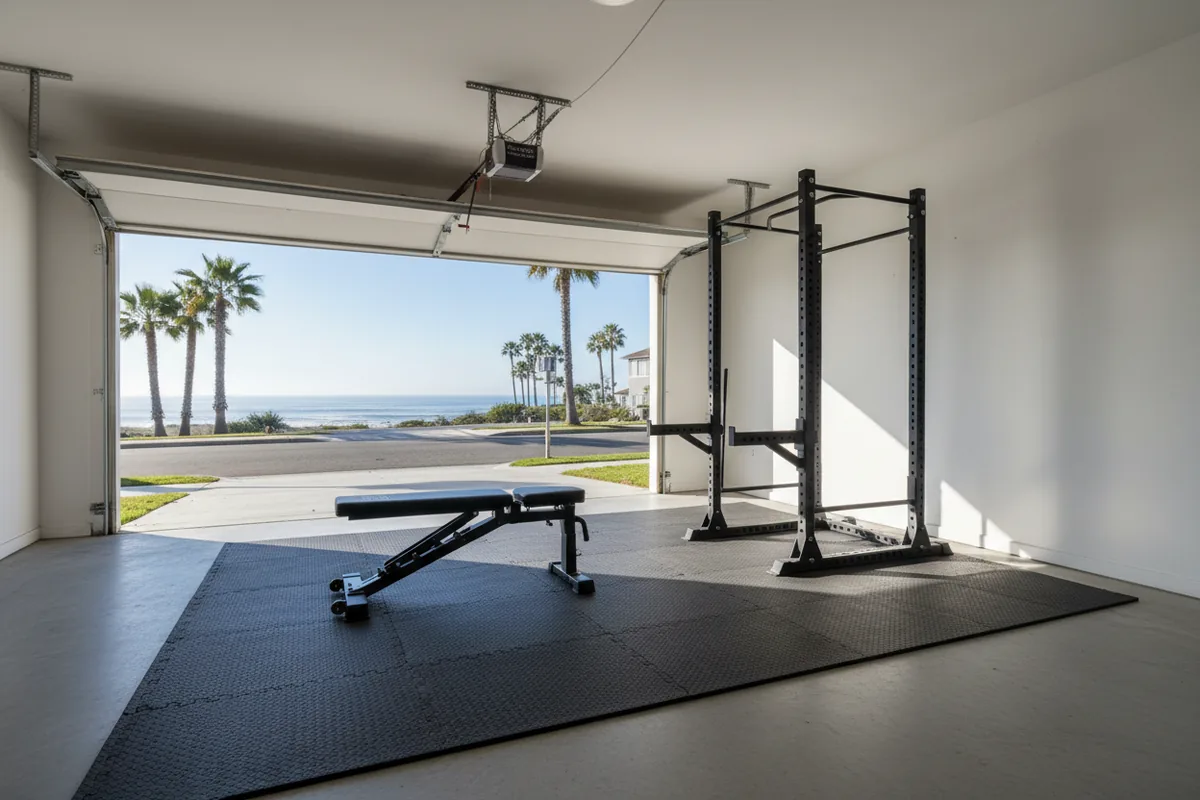
Treadmills, ellipticals, home gyms and racks in San Diego County are usually hauled away as bulky items by a junk removal crew, often after partial disassembly to clear doorways and stairs. Motors, screens and batteries may need separate handling. Working pieces can also go to donation or resale, and some city programs collect large items by appointment.
On this page
What Exercise Equipment Removal Covers
Exercise equipment removal is the hauling away of fitness machines and gear from a home, rental, garage or business. It is one kind of junk removal, which means clearing unwanted items and taking them off the property. The pieces involved typically include:
- Treadmills, ellipticals, stationary bikes and rowing machines.
- Weight machines, cable machines and home gym multi-stations.
- Squat racks, benches, dumbbells and plates.
These are bulky items, meaning large or heavy pieces that cannot go in a standard curbside bin. They are handled differently from ordinary junk for several reasons. Many are dense steel and awkward to carry. Most mix materials (steel frames, rubber belts and grips, upholstered pads, and on motorized machines, wiring and circuit boards). And some will not fit through a doorway or down a stairwell in one piece. A multi-station home gym or a cable machine is often partially taken apart first, which is usually part of what a crew plans for.
When Junk Removal Makes Sense for Gym Equipment
The condition of the equipment usually points to the path. Junk removal tends to be the practical route for equipment that is broken, worn out or missing parts, and for pieces too heavy to move without several people. It also fits when the space has to be cleared by a set date, such as a move-out or an estate cleanout, or when there is no truck or trailer large enough to carry the items.
Working equipment has other possible routes:
| Path | Fits | What to compare |
|---|---|---|
| Donation | Clean, working pieces | Whether a nonprofit or gym accepts that item, and whether it picks up or needs a drop-off |
| Resale | Good condition, complete, known brand | Time spent listing, meeting buyers and helping them load |
| City or hauler bulky-item pickup | Qualifying items at the curb | What the program accepts, how it is scheduled, any fee, and the effort of getting the piece to the curb |
| Junk removal | Broken, heavy or mixed loads, set dates | A written quote, and items carried from where they sit |
Nonprofits and gyms sometimes take working equipment, but acceptance is theirs to confirm before anything is scheduled. Resale through online marketplaces or sporting goods resellers can work for pieces in good shape. Bulky-item pickup rules differ by city and waste hauler across San Diego County, so the reader's own city program or waste hauler confirms what it collects and how. Each path has its trade-off; the choice belongs to whoever is responsible for the property.
Items That Need Special Handling
Motorized machines are where most of the care goes. Within a single treadmill or smart bike, a few components may not go out the same way as the steel frame:
- Screens, consoles and control boards. These count as electronic waste, or e-waste: discarded electronic devices and their parts. In California, electronics are handled under their own disposal rules rather than as ordinary trash, and the receiving facility or local program confirms how a given part is treated.
- Batteries. Some motorized or self-powered machines contain lithium or lead-acid batteries, which are usually handled apart from general debris.
- Upholstered pads. Bench and seat pads are foam and vinyl over a frame, and are typically separated from metal.
- Rubber flooring and mats. These are typically handled as general bulk waste, though the hauler confirms that for a given load.
Flagging these components in a quote request lets the hauler plan for them. What a facility accepts, and how, is that facility's or program's to state.
What Affects the Cost of Removal
No single figure applies to exercise equipment, because the job changes with the property. The factors that usually shape a quote are:
- The number and type of items. A single bike differs from a full garage gym.
- How heavy and bulky the pieces are. Dense steel stations and stacks of plates take more effort and truck space.
- Whether disassembly is needed. Taking a machine apart adds labor and time on site.
- Access. Stairs, narrow hallways, elevators, and the distance from the equipment to the curb or truck all matter.
- Separate handling. Electronics and batteries may go a different way than the frame.
- Location within San Diego County. Where the property sits in the county can be part of the picture.
A written quote sets out these factors for the specific property and load. The pricing guide on this site explains in more detail how quotes are usually structured.
How to Get Ready for Pickup
A little groundwork in the room where the equipment sits tends to make the day simpler. Checklist:
- Clear a path. Moving boxes, rugs and furniture out of the route lets pieces travel from the room to the exit.
- Note which pieces come apart. A list of machines that need disassembly, and whether bolts and hardware are still in place, helps the crew plan tools.
- List access details. Gate codes, parking limits, association rules and elevator reservations belong in the quote request.
- Record sizes if known. Rough dimensions, or the model number from a manual, help describe the load.
- Note floors and stairwells. In a multi-story home or building, the floor the equipment is on and the stairwell width help the hauler plan the carry.
- Set aside what stays. Manuals, warranty papers, keys for locking consoles, and any piece a family member may want can be moved out of the way first.
The how junk removal works page describes the general steps of a pickup from request to haul-away.
Mistakes to Avoid
A few missteps come up often enough to name plainly:
- Assuming every piece moves whole. Large cable machines and multi-station home gyms often cannot fit through standard doorways intact.
- Booking removal first. Working equipment may have a donation or resale route that is worth checking before a pickup is scheduled.
- Leaving heavy pieces at the curb unannounced. Some city and waste hauler programs require a scheduled appointment for bulky items.
- Not flagging batteries or electronics. Unmentioned components can change how those parts are handled on the day.
- Leaving access out of the request. Stairs, gates or parking limits that surface on arrival can lead to a revised quote.
The next practical step is usually a short written list: each machine, its condition, where it sits, and the access notes from the checklist above. A household with working pieces may also look up the bulky-item program for its own city or waste hauler, so every route can be compared side by side.
Ready for a quote?
Add the items, the address and your timing.
Get my junk removal quoteFrequently asked questions
What can I do with old exercise equipment?
Old exercise equipment can go out through junk removal, donation, resale, or a city or waste hauler bulky-item pickup where one applies. Broken pieces usually fit junk removal; working ones may suit donation, once a charity or gym confirms it accepts them, or resale. The comparison table above sets out each route's trade-off.
How do I get rid of unwanted gym equipment?
The route depends on the equipment's condition, size and the timing. Very heavy or broken pieces typically go through junk hauling. Working pieces may be donated or sold. For curbside bulky-item pickup, the reader's own city program or waste hauler confirms what it collects and how appointments work.
Does anybody buy used exercise equipment?
Sporting goods resellers and buyers on online marketplaces sometimes take working used equipment, and some gyms or community centers accept donations. Condition, brand and completeness usually decide whether anyone is interested. A junk removal quote covers hauling only.
Where can I drop off or dump old furniture and exercise equipment in San Diego?
Options generally include a transfer station or landfill (a facility where waste is received and sorted or disposed of), a city's bulky-item pickup, or a donation center for items in good shape. Each facility or program sets its own accepted materials and fees, so it confirms them directly. The San Diego page covers what the City of San Diego handles.
Do treadmills and ellipticals need to be disassembled before removal?
Many treadmills and ellipticals move intact, but some larger models are partially taken apart to clear doorways or stairs. Folding treadmills are generally easier to move than non-folding ones. The hauler typically assesses this from the quote request or on arrival.
Are there electronics or batteries in exercise equipment that need special handling?
Yes. Motorized treadmills, ellipticals and smart fitness machines contain electronics, and some contain batteries. California handles electronics under their own disposal rules, as noted in the special-handling section. Flagging battery-powered parts in a quote request lets the hauler plan for them.
Can I put exercise equipment out for bulky-item pickup in San Diego?
Possibly, depending on the city and waste hauler. Programs differ across San Diego County, and some require a scheduled appointment rather than unannounced curbside placement. The reader's city waste program or hauler confirms whether exercise equipment qualifies and how to book.