An office manager, a business owner, a property manager or a tenant may be facing a full floor or just a few rooms, often with a lease date or a building's rules shaping the work. A useful first step is sorting the space into three groups: what stays, what may have a second life, and what simply needs to leave. The rest of this page follows that order.
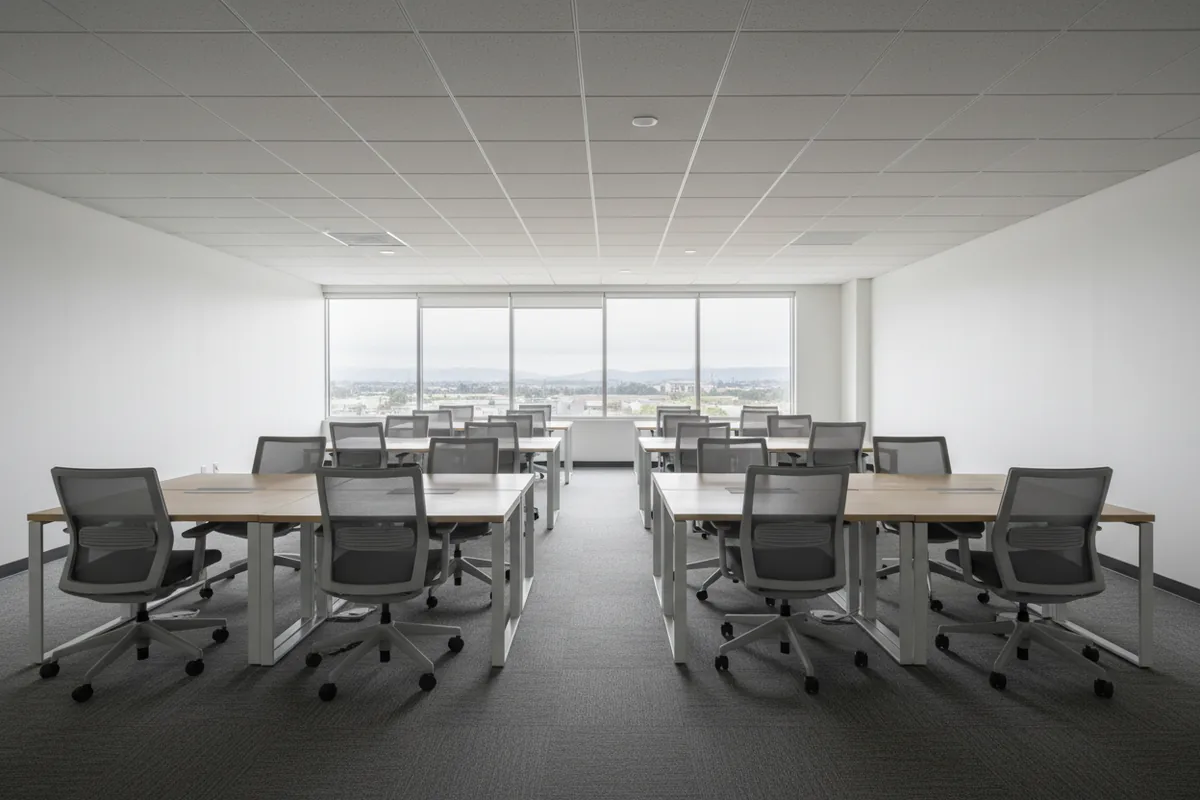
Clearing desks, cubicles, chairs and filing cabinets out of a San Diego County office is usually handled by a hauling company. The crew carries the furniture out, loads it and takes it away. Electronics, lighting and anything with special disposal rules go through separate channels. The cost depends on volume, access and where each item ends up.
On this page
What Office Furniture Removal Covers
Office furniture removal means hauling desks, cubicles, chairs, filing cabinets, shelving and related commercial furnishings out of a workspace. It sits inside the wider service of junk removal in San Diego County, which is the paid pickup and hauling away of unwanted items. Typical pieces include:
- Modular cubicle systems, including panels, work surfaces and overhead storage
- Executive desks and workstations
- Task chairs and guest seating
- Conference tables
- Lateral and vertical filing cabinets
- Bookshelves and storage units
- Reception desks and lobby furniture
An office job differs from a home pickup in a few practical ways. The volume is often larger. Pieces are heavier and more uniform. The building usually sets the terms through its elevators, loading areas and shared hallways. Partial clearouts, such as one department or a storage room, and full-office clearouts both fall under this kind of work.
When Office Furniture Removal Makes Sense
Several situations lead an office to bring in a hauler:
- A relocation or downsizing within San Diego County, where some furniture will not fit the new space.
- A lease end or tenant move-out that calls for the suite to be left clear.
- A renovation or reconfiguration, where old furniture has to leave before new pieces arrive.
- A business closure, or an estate that includes a commercial space to clear.
- Furniture that is too bulky, heavy or numerous for staff to move safely without equipment.
Some pieces may have a route other than disposal, such as donation, resale or recycling. Those routes depend on each item's condition and on what a receiving organization or facility accepts, so sorting them out early tends to help. Nothing about that route is assured. The next section covers the items where the choice of route matters most.
Items That Need Special Handling
Not everything in an office belongs in the same load. These items are usually flagged separately:
- Electronic waste. Electronic waste, or e-waste, means discarded devices such as monitors, computers and printers. California treats many electronics differently from ordinary trash, which is why they are kept out of the furniture load.
- Fluorescent fixtures and ballasts. Some lamps and older ballasts may contain hazardous materials. Household hazardous waste is the term for leftover products that need special disposal, such as chemicals, batteries and certain lamps. Programs built for households may not accept business quantities, so whether a commercial source qualifies is a question for the local program.
- Toner and ink cartridges. Some manufacturers run take-back programs for used cartridges. Whether a particular brand participates is a question for that manufacturer.
- Metal filing cabinets and steel shelving. Metal furniture is a candidate for scrap metal recycling, depending on what the receiving facility accepts.
- Upholstered chairs and fabric cubicle panels. Whether these can be donated depends on their condition and on what a donation organization will take at the time. Stained or damaged pieces usually go to disposal.
- Modular cubicle systems. Cubicles may need to be taken apart before they can leave. Who does that work, and when, is a point to settle in the quote.
This page does not decide what any program accepts. Each program states that for itself, and the San Diego County or city program concerned is the place where those rules are published.
What Affects the Price
A written quote sets out the cost from the specifics of the job. The main factors are:
| Factor | Why it matters |
|---|---|
| Volume and weight | More and heavier furniture takes more space and labor. |
| Type of items | Modular systems that need disassembly add work compared with freestanding pieces. |
| Building access | Floor level, elevator availability, and a loading dock versus a street carry all change how the items move. |
| Stairs, hallways and parking | Narrow corridors, stairwells or limited truck parking slow the carry. |
| Disposal path | Donation, recycling, a transfer station or a landfill each carry different handling. A transfer station is a facility where loads are dropped and sorted before final disposal. |
| Timing | Lease deadlines and building access windows can limit when the work happens. |
The junk removal pricing guide explains these factors in more depth. For an office, access and disassembly often matter as much as the furniture count does.
How to Get Ready
Preparation keeps an office clearout orderly and the quote accurate. The steps below are the ones that most often shape the day:
- An inventory of the items. A list of each type of furniture, its quantity and approximate size gives the hauler a realistic picture.
- Special items flagged. Electronics, lamps and anything with hazardous contents noted in advance appear in the quote request rather than surprising the crew.
- Building rules on hand. The property manager can usually say when the loading dock is open, whether elevators need reserving and where a truck can park.
- Cubicle disassembly settled. It helps to know whether panels and work surfaces have to come apart before pickup and who handles that.
- Keep items separated. Pieces to keep, donate or sell sit in a marked area before removal day.
- Insurance paperwork checked. Some buildings require a certificate of insurance from any hauler working on site.
- Drawers and cabinets emptied. Files, keys and personal belongings come out first so nothing leaves by mistake.
Records deserve particular care. Old files in a cabinet may hold client or employee information; under California Civil Code § 1798.81, a business must take all reasonable steps to dispose, or arrange for the disposal, of customer records containing personal information that it will no longer retain by shredding, erasing, or otherwise modifying the personal information to make it unreadable or undecipherable. That section addresses customer records, not employee files. The how junk removal works guide describes the general steps of sorting and preparing a space.
Mistakes to Avoid
These missteps most often complicate an office clearout:
- Assuming items can go to the curb. City bulky-item collection is generally set up around residences. Whether a program covers a commercial address is a question for that city or county program. The City of San Diego overview describes what the city does and does not pick up.
- Leaving electronics and lamps in the general load. Monitors, printers and fluorescent fixtures mixed in with furniture can create disposal problems later.
- Skipping the building's access rules. Many commercial buildings ask that dock time or elevator use be reserved, so this belongs on the list early.
- Leaving everything to the lease's final day. Building access windows and scheduling become harder to coordinate when there is no slack.
- Mixing keep items with removal items. Sorting after a crew arrives slows the junk hauling itself.
A practical next step is locating the lease's move-out terms and the building's rules for contractors. Those two documents usually answer the access and timing questions a quote will ask.
Ready for a quote?
Add the items, the address and your timing.
Get my junk removal quoteFrequently asked questions
How do you dispose of large items in San Diego?
Large items generally leave through one of three routes: a city's residential bulky-item program, a hauling company, or a drop-off at a transfer station or landfill. Each route has its own acceptance rules, set by the program or facility involved. Commercial clearouts usually involve a hauling company, as described under Mistakes to Avoid.
Do furniture removal companies take office cubicles?
Modular cubicle systems are a typical part of office furniture removal. They may need to be taken apart before or during pickup. Who does the disassembly is a point to settle when requesting a quote, because it affects both the scope of the work and the cost.
Can old office chairs and desks be donated in San Diego?
Some chairs and desks in good condition may be accepted by donation organizations. Acceptance depends on the condition of each piece and on what the organization needs at the time. Nothing about donation is assured, so the receiving organization has the final word on pieces set aside for it.
What happens to monitors and printers removed from an office?
They are set aside from the furniture so they do not end up in the general load. Whether they can be dropped off or collected, and in what quantities from a business, is determined by the county or city e-waste program.
What is the minimum cost for junk removal?
This page states no figure. Cost depends on the volume and type of items, building access, the disposal path and the timing, and a written quote sets it out for the specific job.
Do any furniture companies remove old furniture?
Some furniture retailers offer to haul away old pieces when they deliver new ones. What they take varies by retailer and by item. A full office clearout or a mixed load usually falls outside that service and goes to a junk removal or hauling company.