The structure may sit in your own yard, a rental between tenants, a relative's home or a property you manage. Sometimes it is simply outgrown; sometimes it holds years of family memories. Either way, the questions tend to be the same: what comes apart, what goes where, and what to keep. The structure's size, how it is anchored, what it is made of and how it reaches the curb decide how it leaves the property.
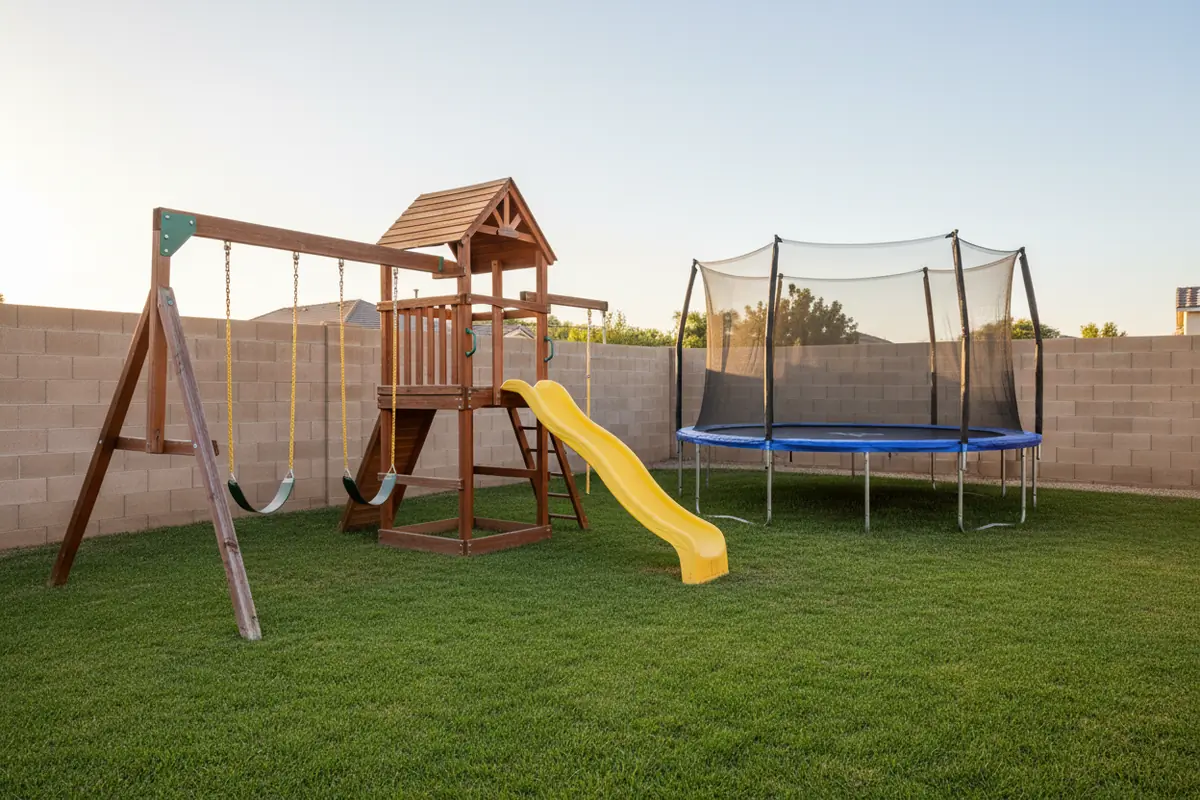
A backyard swing set, playset or trampoline in San Diego County is usually taken down on site, broken into sections and hauled away as a junk removal load. The wood, metal, plastic and hardware leave in pieces. Concrete footings, treated lumber and any wired parts are flagged separately, because they may need a different disposal path.
On this page
What Playset and Trampoline Removal Covers
Playset removal means taking down a backyard play structure and hauling it away as bulk material. Trampoline removal means the same for a trampoline frame, mat and springs. Both fall under junk removal, the hauling away of unwanted items and debris from a property. The structures involved include:
- Wooden swing sets.
- Metal swing sets.
- Modular playsets with slides and climbing walls.
- Standalone trampolines.
- Trampoline enclosures and safety nets.
Disassembly typically comes first, because these structures are too large to carry out whole. The pieces that result are handled as bulky items, meaning oversized pieces that go beyond regular trash collection. That load is separate from green waste, which is grass, branches and yard trimmings. It is also separate from construction and demolition (C&D) debris, which is concrete, masonry and structural material from building or demolition work. The broader junk removal in San Diego County process applies to properties throughout the county.
When Removal Makes Sense
Size and anchoring usually settle this question first. A structure that is heavy, tall or bolted into the ground often needs tools, more than one set of hands and a truck to move.
A few other situations tend to point toward hiring the work out:
- Aging wood playsets. Rotting wood breaks into splintered, irregular lumber that is awkward to load into a personal vehicle.
- Damaged trampolines. A bent or rusted frame may not fold or come apart the way it was designed to.
- Turnovers and cleanouts. A rental between tenants, an estate cleanout or a yard being cleared at the same time as other junk may call for a single haul.
- A deadline from an association or a city. When a structure has to come down by a certain date, the homeowners association or the city states its own requirement. This page does not state those rules.
What happens to the house itself is a separate decision, and clearing a yard does not require selling it.
Rentals, Estates and Anchored Structures
The teardown itself looks much the same from one property to the next. What changes is who is involved and what they need to settle first.
- Rental properties. Between tenants, a property manager or owner is usually the person arranging the job, often alongside other cleanout items. The structure and anything left with it can be confirmed as going before the quote is requested, so the haul can happen in a single trip.
- Estate cleanouts. In a relative's home, the playset is often one item among many, and family members may want to look through it first. A swing seat or a carved beam can be set aside before the rest of the structure is scheduled to come down.
- Anchored structures and local rules. Whether a San Diego County city has requirements for removing a structure set in concrete is stated by that city, and an association may have its own rules. This page does not state any permit requirement. The city or association is the place where that question gets answered.
Items That Need Special Handling
Some parts of a backyard structure do not travel with the rest of the load. For each item below, the final disposal path is set by the hauler, the receiving facility or the relevant city or county program, not by this page.
- Concrete footings. Posts set in concrete turn part of the job into C&D debris, which is handled apart from the wood and metal.
- Pressure-treated lumber. This is wood chemically treated to resist rot and insects. Older playsets may use CCA, short for chromated copper arsenate, a preservative found in some older treated wood. How CCA-treated wood is disposed of is a question for San Diego County's household hazardous waste or solid waste program. Household hazardous waste means products from a home that are hazardous to put in the regular trash.
- Play-surface material. Rubber mulch, sand or wood chips may be handled as green waste or as solid waste depending on what they are made of.
- Springs and metal frames. These are often handled as scrap metal.
- Lights or speakers. Attached electronics count as electronic waste (e-waste), meaning discarded electronic devices, and go through a local e-waste program.
What Affects the Price
Every price comes from a written quote for the specific property. These factors shape that quote:
| Factor | Why it matters |
|---|---|
| Size and material | A multi-level wooden playset produces more volume and weight than a single-bay metal swing set. |
| Disassembly | Structures bolted together with a lot of hardware take more labor than ones that come apart in sections. |
| Access | Narrow side gates, fences, steps or slopes between the structure and the curb change how the load is carried. |
| Concrete footings | Set concrete adds a separate material and more labor. |
| Load volume | Junk removal is typically priced by how much space the material takes in the truck. |
| Disposal path | Wood, metal and C&D debris may each go to a different facility. |
The general factors behind junk removal pricing apply here too. The difference is that a playset adds a teardown step before anything is loaded.
How to Get Ready
A little preparation makes the teardown smoother and the quote more accurate. Typical steps include:
- Clearing the area. Toys, garden tools, potted plants and anything stored under or beside the structure can be moved out of the way.
- Measuring the gate. A photo or measurement of the gate opening shows whether large sections can pass through.
- Noting the footings. It helps to know whether posts are set in concrete and how deep, if known.
- Sorting attached items. Swings, nets, tarps or sandbox lids can be marked as going with the structure or staying.
- Checking the posts. A "CCA" or "ACQ" stamp or tag may appear near the base of older wood posts.
- Checking local rules. An association or city may set limits on work hours or street parking for a hauling truck.
A swing seat, a name carved into a beam or a piece someone in the family wants to keep can be set aside now. Those decisions belong to the household, and there is no need to rush them. The steps of a typical pickup are laid out under how junk removal works.
Mistakes to Avoid
Counting on curbside collection is a common misstep. A full trampoline frame or playset may not fit the size limits of a city's curbside pickup. Where a city offers bulky-item pickup, its program states what it accepts. For the City of San Diego, the City of San Diego junk guide is one place to start.
A few other missteps tend to complicate a job:
- Leaving the footings out. A quote that does not mention concrete may not include it.
- Taking it apart early without coordinating. Some haulers prefer to break the load down themselves.
- Putting treated lumber in the green-waste bin. CCA-treated wood follows the separate path described under special handling.
- Forgetting the ground cover. Rubber mulch, sand or wood chips add volume and may need separate handling.
A short written note covering the gate width, the footings, any stamp on the posts and any wired parts gives a hauler most of what it needs to prepare an accurate quote.
Ready for a quote?
Add the items, the address and your timing.
Get my junk removal quoteFrequently asked questions
Can a trampoline go out with regular curbside trash in San Diego?
It depends on the city's program. Where a city offers bulky-item pickup, its program sets its own size limits and states what it accepts, and a full trampoline frame may exceed them. Junk removal handles oversized items that curbside collection does not take.
Does the hauler disassemble the playset, or does the homeowner need to do it first?
Disassembly is typically part of playset removal, but the scope of the job is confirmed when a quote is requested. Taking the structure apart beforehand without coordinating can complicate how the load is broken down.
What happens to the wood from an old playset?
That depends on whether the wood is treated and on what the receiving facility accepts. Untreated wood and treated wood may go to different places. Where any item ends up is not assured.
Are trampoline springs and metal frames recyclable?
Metal parts are often handled as scrap metal. The actual path depends on the facility the hauler uses, so recycling is not assured.
What if the playset has concrete footings?
Concrete is C&D debris and is handled separately from wood and metal. Mentioning the footings in the quote request lets the hauler account for the extra material and labor.
Is pressure-treated lumber from a playset considered hazardous waste?
The program or facility that receives CCA-treated wood confirms how it is classified and where it goes, so checking with it ahead of the job settles the disposal path.
How is playset removal different from a standard junk removal pickup?
The main difference is the teardown on site. Once the structure is in sections, it is hauled as a regular load, much like other junk hauling in San Diego.