If you are facing a storage unit cleanout, the unit is likely at a facility you do not control, and it may hold your own things, a relative's or a former tenant's. The facility's move-out terms set the frame for the work. The sort comes first, and everything that follows, including the haul, depends on what that sort turns up.
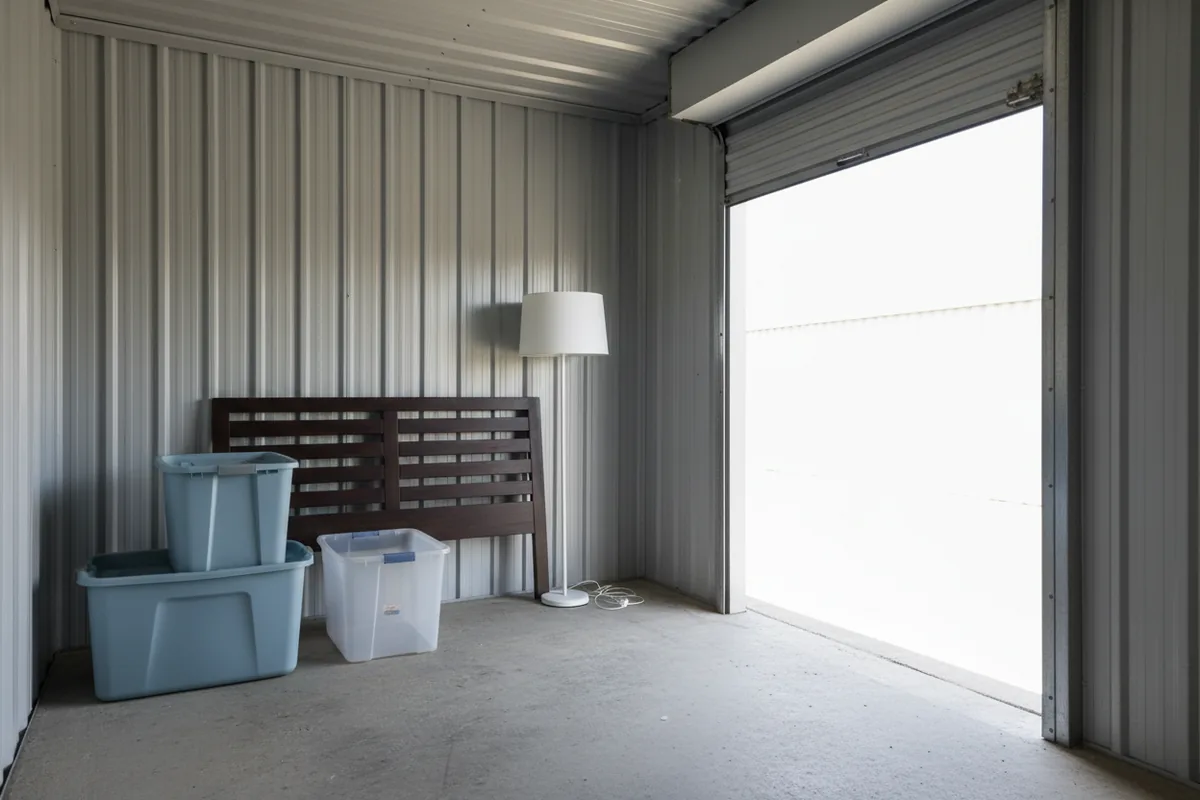
A storage unit cleanout in San Diego County empties a rented unit completely. First the contents are sorted into what you keep and what leaves, with items that need separate handling set aside. A hauler then removes the rest for donation, recycling or disposal, depending on what receiving facilities accept. A written quote reflects the amount, the kind of items and the access.
On this page
What a Storage Unit Cleanout Covers
A cleanout clears everything out of a rented unit, not just the pieces you no longer want. That includes deciding what stays with you, what goes, and where each item that leaves ends up. Junk removal is the broad term for taking unwanted items away. Hauling is the trip itself.
A single-item pickup deals with one or two pieces. A cleanout deals with the whole space, and storage units rarely hold just one kind of thing. A typical unit might contain:
- furniture
- appliances
- boxes of household goods
- clothing
- tools
- construction materials
- electronics
Before any hauling starts, the renter or the estate representative makes the sorting decisions, and nothing leaves the unit until those calls are made. The same approach applies to garage cleanouts, where the sort is usually the slowest part.
When a Storage Unit Cleanout Makes Sense
The most common trigger is a lease that is ending, or a facility that needs the space back. Either way, there is a move-out date the work has to fit.
Other situations also lead to a full cleanout:
- Estate administration. A deceased person's stored belongings are cleared as part of settling their affairs. The process has much in common with estate cleanouts.
- A landlord or property manager reclaiming a unit. This happens when a tenant has vacated and left contents behind.
- Long-term storage that has outgrown its purpose. The contents are no longer needed, or no one can say what is in the boxes anymore.
- A move out of San Diego County. Transporting the stored items is not practical.
Items That Need Special Handling
Some things that turn up in storage units do not belong in a general hauling load. Each category below has its own channel:
| Category | What it means | Examples found in storage |
|---|---|---|
| Household hazardous waste | Household products that are flammable, toxic or corrosive | Paints, solvents, pesticides, batteries, fluorescent bulbs |
| Electronic waste | Discarded devices with circuit boards or screens | Televisions, computers, monitors |
| Appliances with refrigerant | Units with a sealed cooling system | Refrigerators, air conditioners, dehumidifiers |
| Mattresses | Mattresses and box springs | Stored beds |
| Tires | Vehicle and equipment tires | Spares, seasonal sets |
| Paint | Latex and oil-based paint | Leftover cans |
| Construction and demolition debris | Material from building or remodeling work | Lumber, drywall, tile, leftover materials |
| Green waste | Plant material from yards | Rarely found in storage, but possible in planters |
Acceptance rules differ by channel, so the program or agency behind each category is where its current drop-off details and accepted items are listed:
- Household hazardous waste and electronic waste. San Diego County's programs set their own rules for drop-off and accepted items.
- Mattresses. The facility or program that takes mattresses confirms how they are accepted.
- Construction and demolition debris. This material is handled separately from household junk.
- Appliances with refrigerant. The cooling system's contents fall under federal recovery rules. The appliance stays out of the general load so the refrigerant can be handled the way those rules provide.
What Affects the Price of a Storage Unit Cleanout
A written quote reflects several variables, and each one can move the total:
- Volume and weight. More material takes more load capacity and can raise disposal cost.
- Item types. Special-handling items carry separate disposal requirements, so they affect the total.
- Access. A ground-floor unit is a different job from an upper-floor one, and an elevator makes a difference. So does the distance from the unit door to where the truck can park.
- Sorting work. Contents that are already sorted take less time than contents that still need sorting at the unit.
- Disposal channel. Items headed for donation or recycling take a different route than items bound for a transfer station, where loads are dropped and consolidated, or a landfill.
Transfer stations and landfills charge from their own current published schedules, which is why a quote is built around the actual load rather than a flat figure. The junk removal pricing factors work the same way for a storage unit as for a home.
How to Get Ready Before the Cleanout
At a storage facility, getting ready mostly comes down to three things: the sort, the paperwork and the facility's rules.
- A four-way sort. Putting every item into keep, donate, recycle or dispose gives each pile a clear route out of the unit.
- Special-handling items set aside. Electronics, appliances, mattresses, tires and hazardous products can then be routed on their own.
- The facility's move-out requirements. The notice period, the required condition of the unit and any rules about leaving items at the door are written there.
- Estate or account documents. Executor authority and the facility account information may be needed to get access.
- Photos before anything moves. A photo record of the contents can serve estate or insurance purposes.
- Access logistics. Facility hours, elevator availability and parking for a hauling vehicle all shape when and how the pickup happens.
- Items of value or meaning. Pulling these out early gives family members a chance to look through them before the cleanout date.
Large pieces such as sofas and dressers follow the same steps as general furniture removal.
Mistakes to Avoid
These missteps tend to complicate or slow a storage unit cleanout:
- Leaving the sort until the last day before move-out. Sorting takes care, and a rushed sort narrows what can go to donation.
- Mixing special-handling items into the general load. Electronics, hazardous products and refrigerant appliances follow separate routes.
- Assuming everything can go to a landfill. Certain materials have their own disposal rules, as the table above shows.
- Overlooking the facility's move-out inspection. The facility's own terms say what condition the unit must be left in.
- Discarding items without a review pass. Papers, photos and keepsakes can matter to an estate or a family member.
- Scheduling before confirming access. Facility hours and parking decide when a pickup can happen.
Ready for a quote?
Add the items, the address and your timing.
Get my junk removal quoteFrequently asked questions
How do I empty a storage unit?
The sort comes first, before anything leaves the unit. Items that need special handling, such as electronics, appliances and hazardous products, are set aside for separate routing. The rest goes out with a hauler or to a transfer station. The how junk removal works steps follow the same order.
How do I dispose of large items in San Diego?
It depends on the item. General furniture and junk go to a transfer station or landfill. Appliances with refrigerant, electronic waste, mattresses and tires each have their own channels with their own acceptance rules. The City of San Diego says it does not provide bulky item pickup or curbside pick-up services.
What items from a storage unit cannot go in a regular trash or hauling load?
Household hazardous waste, electronic waste, appliances with refrigerant, mattresses, tires and certain paints follow separate channels. The special-handling table above lists each category with examples.
How much does a storage unit cleanout cost in San Diego?
The cost depends on the volume and weight, any special-handling items, access at the facility, sorting work and disposal fees. Those fees are set by each facility's current schedule. A written quote accounts for all of these variables.
Can I donate items from a storage unit cleanout in San Diego?
Usable furniture, clothing and household goods may suit donation. What is taken is up to the receiving organization, and it depends on each item's condition. Setting donation items apart during the sort keeps that option open.