The refrigerator may be in your own garage, a unit you are turning over between tenants, or a relative's home you are clearing. The questions are the same in each case. Is the unit empty and disconnected? How does it get from where it stands to a truck? Which route fits: a city curbside pickup, a retailer's haul-away, a donation or a private removal? Some of these decisions can wait. Emptying and defrosting the unit cannot be skipped.
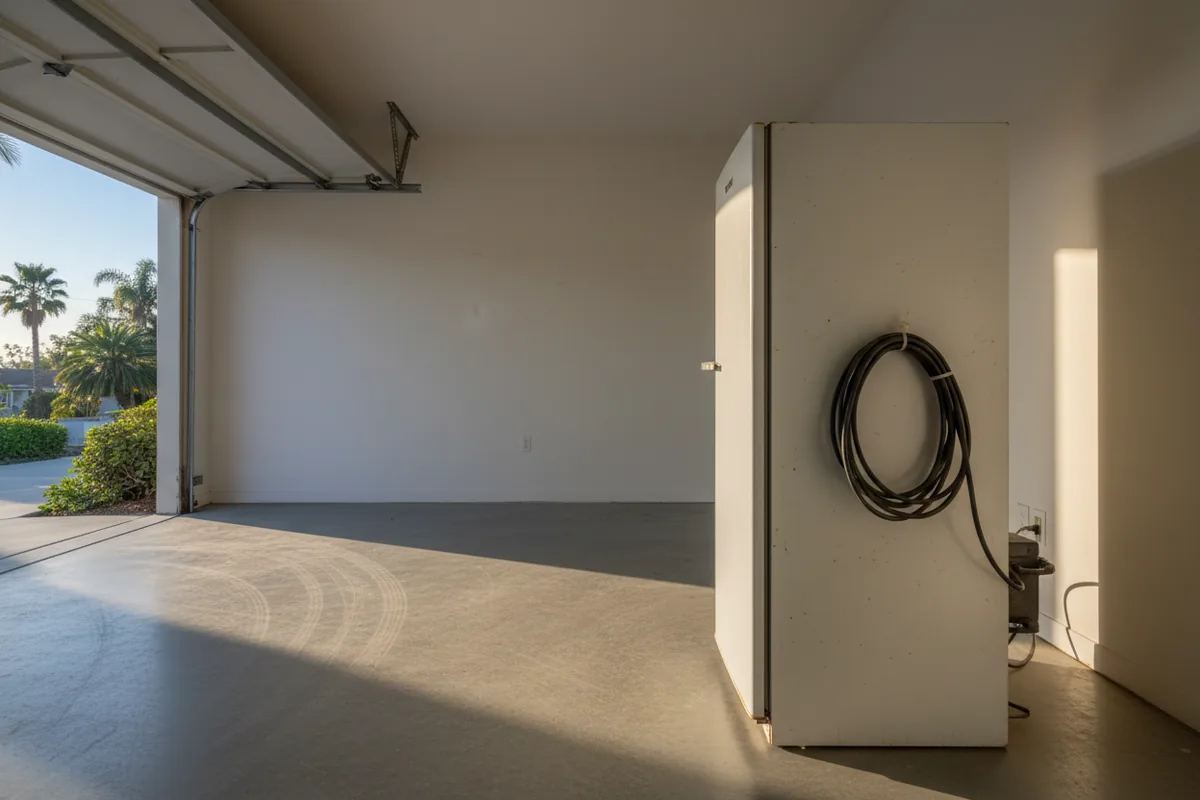
An old refrigerator in a San Diego County kitchen, garage or rental can be hauled away. It goes out a little differently from a couch or a box of junk. Its refrigerant has to be recovered before the unit is recycled or disposed of. That one step shapes the route, the preparation and the quote.
On this page
What Refrigerator Removal Covers
Refrigerator removal is a kind of junk removal. Junk removal means hauling unwanted items off a property. Refrigerator removal applies that work to appliances that keep things cold. The units it usually covers are:
- Full-size refrigerators, including top-freezer, side-by-side and French-door models
- Combination fridge-freezers
- Stand-alone freezer units, upright or chest
- Mini-fridges
- Wine coolers
A refrigerator is a bulky item, meaning an object too large for a regular trash cart. It carries one handling step that a sofa or a mattress does not. That step is refrigerant recovery: the refrigerant gas in the cooling system is extracted before the unit is recycled or disposed of. Under the EPA's Section 608 program, the person recovering it must use "recovery equipment that meets the standards" the rule sets. The rule concerns how the gas is handled. It says nothing about any particular company. The general steps of a pickup are laid out in how junk removal works.
When Refrigerator Removal Makes Sense
A refrigerator usually leaves a property during a larger change. Common examples are an appliance upgrade, a remodel, a move-out, a rental turnover or an estate cleanout. A cleanout means clearing most or all of the contents from a space. The right route depends on where the unit is, what else is going, and the timing.
| Route | Where it fits | What to compare |
|---|---|---|
| City or hauler bulky-item pickup | A unit that can be set out at the curb | Who qualifies, what is accepted, scheduling |
| Retailer haul-away | A new unit is being delivered | Terms set at purchase, any added cost |
| Donation | A working unit in good condition | The receiving group's own criteria |
| Private removal | Hard access, several items, or no delivery involved | A written quote for that property |
For residents in its service area, the City of San Diego Environmental Services Department confirms whether a bulky-item pickup is offered, which items it accepts and how pickups are scheduled. In unincorporated San Diego County, the contracted waste hauler for the address answers those questions. The City's own collection is covered in junk removal in San Diego.
A curbside pickup starts at the curb. A unit in an upstairs kitchen, at the back of a garage or behind a gated entry still has to get there. A private removal usually includes carrying the unit out of the building.
Items That Need Special Handling
The refrigerant is the main reason a refrigerator is handled differently. Older units may contain CFCs (chlorofluorocarbons), a refrigerant that depletes ozone and is often sold under the name Freon. Newer units usually use HFCs (hydrofluorocarbons). Under the EPA's Section 608 program, both types are recovered before the appliance is recycled or disposed of. The EPA program confirms how the requirement applies to a specific unit.
Some older refrigerators also contain compressor oils and other fluids. These can be handled as hazardous waste, which keeps them out of the regular trash stream. The facility that receives the unit confirms how it treats those fluids.
Other items sometimes go out with a refrigerator, such as a freezer, a window air conditioner or a dehumidifier. Many of these also cool with refrigerant. List each one in a quote request so that every unit is accounted for. Other items that California and City rules keep out of the trash are covered in junk removal in San Diego County.
What Affects the Cost of Refrigerator Removal
A quote for refrigerator removal is built from a few factors. A written quote sets each one out for the specific property. No figure is given here.
- Refrigerant recovery. This handling step does not apply to ordinary junk, so it adds to the work.
- Size and weight. A side-by-side or French-door model is heavier and bulkier than a mini-fridge.
- Access. Stairs, narrow hallways, tight doorways, the distance to the curb or truck, and whether a multi-unit building has an elevator all affect the job.
- Number of units. Several appliances removed together are usually quoted differently than a single unit.
- Where the unit goes. Recycling, landfill disposal and donation each involve different handling.
- Timing. Short-notice or weekend requests may be priced differently from a scheduled weekday pickup.
How these factors combine across a whole load is covered in junk removal pricing. A refrigerator in a ground-floor garage near the driveway and one in a third-floor walk-up are different jobs. The quote describes the job as it stands at that address.
How to Get Ready for Refrigerator Removal
Most of the preparation happens before anyone arrives. The steps below apply whichever route you choose.
- Empty the unit completely. Take out all food, shelves, drawers and ice so nothing shifts or spills on the way out.
- Defrost the freezer if it has one. Melting ice leaves standing water, which makes the unit harder and messier to move.
- Disconnect the water line. An ice maker or water dispenser has a supply line, and a plumber may be needed if the line is hard-plumbed.
- Clear a path to the exit. Move chairs, rugs and other items that sit between the unit and the door.
- Note the access details. List stairs, tight doorways, parking limits, association rules and any gated entry in the quote request.
- Check the warranty. Some manufacturer or extended warranties include removal provisions.
- Set aside anything worth keeping. Remove magnets, photos, papers or notes from the door and the top of the unit.
If other items are going out at the same visit, group them near the refrigerator's route. The general flow of a load is described in junk hauling in San Diego County.
Mistakes to Avoid
A few common steps make a refrigerator harder to remove than it needs to be.
Setting the unit at the curb without a scheduled pickup. In the City of San Diego and in unincorporated areas, a large appliance left at the curb without a pickup arranged may break local solid-waste rules. The City's Environmental Services Department or the local waste hauler confirms what applies at your address.
Treating a dumpster as an easy answer. Refrigerant recovery comes before a unit goes to a landfill or a transfer station, which is a facility where loads are sorted and consolidated. Many bin-rental companies will not accept a refrigerator that has not had its refrigerant removed. Ask the bin company before loading one.
Leaving the water line connected. A connected ice-maker line can leak or tear during the move and cause water damage.
Leaving food or liquids inside. Spills during transport cause odor and sanitation problems.
Leaving out access details. Stairs or tight hallways that were not mentioned can change the scope of the work on the day of the pickup.
A useful next step is to look up the unit's model and warranty papers. Then check with the City's Environmental Services Department or the waste hauler for your address about bulky-item pickup.
Ready for a quote?
Add the items, the address and your timing.
Get my junk removal quoteFrequently asked questions
Do people collect old refrigerators for free?
Some collectors do pick up working or salvageable units. Whatever the price, refrigerant recovery under the EPA's Section 608 program still comes before the unit is recycled or disposed of. Ask any collector how that step is handled.
Is there a cost to get rid of a refrigerator?
It depends on the route. Where a city or a county waste hauler offers a bulky-item pickup, its cost is set by that program's terms. A private removal is quoted from the unit, the access and the handling involved. Refrigerant recovery applies on every route.
Can a refrigerator go in a regular dumpster or roll-off bin?
Not before its refrigerant is recovered. As noted under Mistakes to Avoid, many bin-rental companies decline refrigerators that still hold refrigerant. The bin company confirms its own rules.
Does the City of San Diego offer bulky-item pickup for refrigerators?
For residents in its service area, the City of San Diego Environmental Services Department confirms whether a bulky-item pickup is offered, the accepted items and how pickups are scheduled. In unincorporated areas, the contracted waste hauler confirms the options.
What happens to the refrigerant before a unit is recycled?
Under the EPA's Section 608 program, the refrigerant gas is extracted with "recovery equipment that meets the standards" the rule sets, before the appliance is recycled or disposed of. This applies whether or not the unit still works.
Can a working refrigerator be donated instead of removed for disposal?
Sometimes. Each receiving organization sets its own criteria, and condition, age and model all count. Confirm acceptance with the organization before arranging any removal.
What is the minimum cost for junk removal?
No single minimum applies across every job. A quote reflects the items, their volume and weight, the access and where they go. A written quote sets out the scope and cost for a specific property.
Does an appliance retailer remove the old refrigerator?
Some retailers offer haul-away of the old unit when they deliver a new one. Terms and any cost vary by retailer and delivery area, so confirm them at purchase. A private removal covers cases where no delivery is involved.